2026-06-23
Adobe Inc. is the world’s dominant creative and document-management software company, selling subscriptions to roughly 30 million creative professionals and hundreds of thousands of enterprise marketing teams. Its three segments — Digital Media (Creative Cloud + Acrobat), Digital Experience (marketing analytics, commerce), and a small Publishing unit — generate nearly all revenue as recurring subscriptions. The model is sticky, capital-light, and throws off exceptional free cash flow. The question in mid-2026 is whether a leadership vacuum and a rapidly crowding AI landscape are beginning to erode the moat that made it exceptional.
- Intrinsic value, DCF: USD $240 per share (range: USD $190 to USD $310)
- Intrinsic value, MEV: USD $225 per share (range: USD $185 to USD $280)
- PE (TTM): 11.2x, based on TTM EPS of USD $17.49. This is 75% below the 10-year historical average PE of approximately 44x, and roughly 67% below the 5-year average of 38x. The compression reflects genuine uncertainty about AI disruption, not merely a market-wide multiple contraction.
- PEG: 0.55, using consensus forward growth. A figure below 1.0 is conventionally attractive, though this must be weighed against downward earnings-revision risk if AI competition intensifies.
- Valuation confidence: Medium. Financials are clean and voluminous. The core uncertainty is qualitative: how much of the moat survives the AI-native wave and the leadership transition.
At-a-Glance Scorecard
| Factor | Assessment |
|---|---|
| Business model: simple and sustainable? | Yes — subscription SaaS, recurring, capital-light |
| Moat: present? | Yes — but narrowing; switching costs + ecosystem lock-in |
| Management: competent and shareholder-aligned? | Uncertain — CEO departed March 2026, CFO departed June 2026 |
| Intrinsic value, DCF (range) | USD $190 to USD $310 |
| Intrinsic value, MEV (range) | USD $185 to USD $280 |
| PE / PEG | 11.2x / 0.55 |
| Current price vs. intrinsic value | Roughly at or slightly below low-end fair value; modest undervaluation |
| Margin of safety | Approximately 5% to 20% depending on which scenario is weighted |
| Free cash flow: strong? | Yes — USD $9.9 billion in FY2025; 41% FCF margin |
| Balance sheet: strong? | Adequate — net debt of USD $1.45 billion; manageable |
| Biggest single risk | AI-native tools commoditizing creative work, reducing seat demand |
| Buy price to hit 9% per year over 16 years | Approximately USD $130 to USD $155 per share |
| Would I still buy if the market closed for 5 years? | No — leadership vacuum and AI disruption risk require monitoring |
| Snapshot verdict | Hold |
| Valuation confidence | Medium |
Key inputs used to calculate intrinsic value:
- FY2025 free cash flow: USD $9.852 billion (source: Macrotrends, Adobe 10-K FY2025)
- TTM free cash flow (to May 2026): approximately USD $10.28 billion (source: StockAnalysis)
- Base FCF growth assumption: 9% per year for years 1–5, stepping down to 7% for years 6–10, terminal rate 3.5%
- Discount rate: 10%
- Shares outstanding: 397.5 million (source: StockAnalysis, as of June 2026)
- TTM EPS: USD $17.49 (source: FullRatio, June 18, 2026)
- MEV normalized earnings base: USD $17.49 EPS; fair multiple applied: 13x (compressed versus historical given AI uncertainty)
- FY2026 revenue guidance: USD $20.5 to USD $20.6 billion (source: Adobe Q2 FY2026 earnings call)
Deep Dive
Business Understanding
Adobe operates three interlocking subscription businesses. Digital Media, which generates roughly 74% of revenue, sells Creative Cloud (Photoshop, Illustrator, Premiere Pro, After Effects, and Firefly) to creative professionals, and Acrobat/Sign to knowledge workers. Digital Experience sells analytics, commerce, and campaign tools to enterprise marketing departments. Publishing and Advertising is a small legacy segment now subject to a goodwill impairment charge. Revenue grew from USD $11.2 billion in FY2019 to USD $23.8 billion in FY2025, nearly doubling in six years. The subscription model produces Annualized Recurring Revenue of USD $25.2 billion exiting FY2025 and USD $27.1 billion exiting Q2 FY2026. Demand has been durable across economic cycles, though the AI transition introduces a structural uncertainty: if AI agents reduce the number of skilled human creatives needed, seat counts could stagnate or shrink.
Competitive Advantage and Positioning
Adobe’s moat is genuine but under more pressure than at any point in its history. The core advantages are deep workflow integration (professionals build entire careers around Photoshop and Premiere Pro, making switching costly in time and retraining), a vast asset ecosystem (millions of templates, fonts, and stock assets available only within the Adobe suite), and network effects in the enterprise marketing stack. Against these, Canva has reached 260 million monthly active users and USD $4 billion ARR growing above 30%. Figma, now public, holds 80 to 90% share in UI/UX design and is actively encroaching on Adobe’s territory. Midjourney, Runway, and Luma AI have commoditized high-quality image and video generation. Adobe is fighting back with Firefly (generative AI embedded in Creative Cloud) and AI-first ARR that tripled year-over-year to surpass USD $500 million in Q2 FY2026. The moat is narrowing but has not broken.
Financial Strength, Profitability
The financial track record is outstanding. Revenue has compounded at approximately 13% per year over six years. Operating margins (GAAP) have expanded to approximately 36.7%. Gross margins are 89%. ROIC stands at 60.7% on a trailing basis (source: StockAnalysis), one of the highest among large-cap software companies. Net income grew 28% in FY2025 to USD $7.13 billion. Non-GAAP EPS reached USD $20.94 in FY2025 and is on track to expand further in FY2026. The quality of earnings is high: the business requires minimal capital reinvestment, and free cash flow closely tracks reported earnings.
Financial Strength, Balance Sheet
Cash and marketable securities stand at USD $5.63 billion. Total debt is USD $7.08 billion, yielding net debt of approximately USD $1.45 billion, or roughly 0.15x trailing EBITDA. This is not a stressed balance sheet. The Altman Z-Score of 8.35 is well into safe territory. The pending acquisition of Semrush for approximately USD $1.9 billion (announced in FY2025) will modestly increase debt but is not a balance-sheet threat. There is no significant pension liability or off-balance-sheet concern visible in public filings. The main balance sheet flag is goodwill: a USD $0.17 per share impairment charge was recorded in Q2 FY2026 against the Publishing and Advertising segment.
Financial Strength, Cash Flow
Free cash flow has compounded from USD $4.0 billion in FY2019 to USD $9.9 billion in FY2025, a compound growth rate of approximately 16% per year. The FCF margin is approximately 41.5%, implying that nearly every dollar of growth drops almost entirely to cash. Capex is minimal at USD $201 million in the trailing twelve months against USD $10.5 billion of operating cash flow, confirming this is a nearly pure software business with negligible physical capital requirements. Share count has declined consistently: from 477 million diluted shares in FY2022 to 397.5 million outstanding in June 2026, a reduction of roughly 17% over four years. Adobe repurchased approximately 30.8 million shares in FY2025 alone, a strong signal of capital discipline.
Margin of Safety
At USD $195 per share, the stock trades near the low end of the DCF fair value range (USD $190 to USD $310) and slightly below the MEV range midpoint of USD $225. The margin of safety is thin in the base case but more meaningful in the bear-case scenario, where the stock is modestly above floor value. This is not the 40 to 50% discount Buffett would demand. However, at 11x trailing earnings for a business with 41% FCF margins, 60% ROIC, and 10% to 13% revenue growth, the absolute valuation is not stretched. Whether it is “cheap enough” depends entirely on how credible the bear-case AI disruption risk is judged to be. An investor who is confident the moat holds for another decade finds a meaningful margin of safety; an investor who believes the creative tools category is being commoditized does not.
Mispricing Thesis
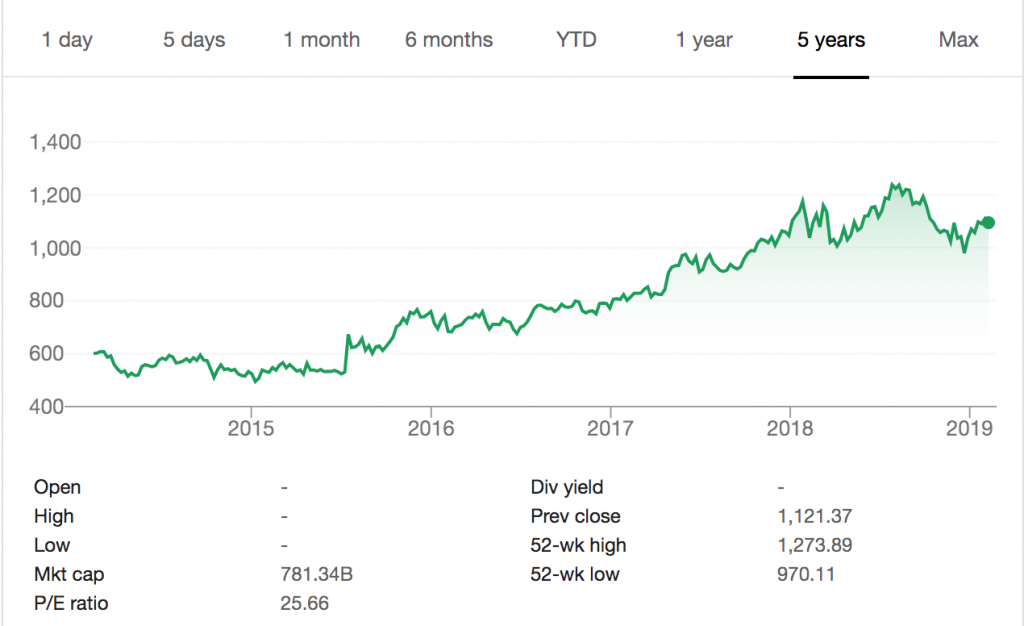
The stock has fallen approximately 49% over the past year and 44% over five years. The market is pricing in a substantial structural deterioration that has not yet materialized in the financials. Revenue grew 11 to 13% in FY2025 and Q2 FY2026. FCF grew 25% in FY2025. AI-first ARR is tripling year-over-year. The market’s concern is forward-looking: will Canva, Figma, and AI-native tools eventually compress seat counts and force price concessions? That is a legitimate question. But the current price implies almost no growth premium and ignores the fact that Adobe is itself deploying AI features (Firefly) that are adding measurable ARR. The gap may close if a new CEO is announced and provides strategic clarity, or if growth continues to exceed diminished expectations.
Management and Capital Allocation
Shantanu Narayen, who executed Adobe’s transformation to the cloud and subscription model, announced his departure in March 2026. CFO Dan Durn departed June 15, 2026. Both transitions are simultaneous, which is genuinely unsettling. Adobe is now being run by an interim CFO (Steve Day) while a CEO search is underway. Capital allocation under Narayen was excellent: disciplined buybacks (at valuations far below current peaks), reinvestment in R&D at approximately 17 to 18% of revenue, and avoidance of empire-building acquisitions. The failed Figma acquisition (blocked by regulators in late 2023 at USD $20 billion) was arguably fortunate for Adobe shareholders. Management pay has been heavily performance-linked. The leadership vacuum is the single most important qualitative risk today.
Long-Term Outlook
Adobe’s products are embedded in global creative, marketing, and document workflows. This does not evaporate. Acrobat alone has hundreds of millions of users whose institutional reliance on the PDF standard is not going to shift to Canva. Creative Cloud, while under competitive pressure, remains the professional standard. The Semrush acquisition adds a large SEO and content marketing platform that extends the Digital Experience business. AI-first ARR is accelerating, and Firefly’s video and vector capabilities are advancing. If Adobe successfully transitions from a tool provider to an AI creative platform, its per-seat economics could improve as AI multiplies output per user. The disruption risk is real but the extinction scenario is not.
Risk Assessment
The risks that could cause permanent capital loss are: (1) AI-native tools reduce the number of professional creatives and marketers needed, structurally shrinking the addressable seat count over five to ten years; (2) Canva and Figma successfully convert mid-market enterprise customers, reducing renewal rates and forcing price cuts; (3) leadership transition results in strategic drift, R&D missteps, or loss of key talent; (4) regulatory action against subscription practices (the FTC has scrutinized Adobe’s cancellation terms); and (5) a macro recession compresses enterprise marketing budgets, hitting the Digital Experience segment disproportionately.
Red Flag Scan
- Free cash flow: growing strongly, no concern.
- Rising debt without rising earnings: debt is modest and stable; no concern.
- Misaligned management pay: historical track record good; current situation uncertain with leadership transition.
- Serial acquisitions: no pattern; the Semrush deal is small relative to balance sheet.
- Accounting complexity: clean subscription accounting; no concern.
- Moat erosion: visible and ongoing from Canva, Figma, and AI-native tools; flagged as the primary risk.
- Overreliance on one product: Creative Cloud dominates, creating concentration risk if AI tools commoditize this category.
- Leadership vacuum: both CEO and CFO departed within three months; this is a material governance flag.
Disconfirming Evidence
The bear case for Adobe is more coherent than bulls typically concede. Canva’s 260 million monthly active users and USD $4 billion ARR demonstrate it has successfully colonized the mid-market and small-business tier that Adobe has historically not prioritized. But the boundaries are dissolving: Canva acquired Affinity (a professional creative suite) and is launching free versions. Figma, now publicly traded with 40% ARR growth and 80 to 90% market share in UI/UX design, is a credible threat to Illustrator and XD. The more existential risk is structural: if a marketing team of ten previously needed eight designers and two managers, AI agents may soon enable two designers to produce the same output. That is a demand problem for any per-seat software business, and Adobe’s pricing model is heavily seat-based.
The leadership transition makes this worse. Narayen was the architect of the subscription model; his departure at a moment when strategy needs redefining is poor timing. The simultaneous CFO exit adds instability. There is no announced successor and no timeline.
On balance, this analysis does not concede the bear case, because: (1) the actual financial data shows no demand destruction yet; (2) Adobe’s Firefly AI is generating measurable incremental ARR, not merely replacing existing; (3) Acrobat’s institutional embeddedness in the PDF ecosystem is extremely durable; and (4) the current valuation already prices in substantial deterioration. However, the margin of safety at USD $195 is thin enough that the bear case is not comfortably absorbed. An investor who is wrong about the moat durability by even 20% finds themselves holding fair value, not a bargain.
Weighted SWOT
Strengths
| Factor | Weight | Score (1-10) | Weighted |
|---|---|---|---|
| Dominant brand in professional creative tools | 0.25 | 8 | 2.00 |
| Exceptional FCF generation (41% margin) | 0.25 | 9 | 2.25 |
| Deep workflow switching costs | 0.20 | 7 | 1.40 |
| PDF/Acrobat institutional embeddedness | 0.15 | 9 | 1.35 |
| Consistent buyback-driven EPS growth | 0.15 | 8 | 1.20 |
| Strengths subtotal | 8.20 |
Weaknesses
| Factor | Weight | Score (1-10) | Weighted |
|---|---|---|---|
| Leadership vacuum (no permanent CEO or CFO) | 0.35 | 2 | 0.70 |
| Seat-based pricing vulnerable to AI seat compression | 0.30 | 3 | 0.90 |
| Failed Figma acquisition removed a strategic option | 0.20 | 4 | 0.80 |
| Regulatory scrutiny of subscription cancellation terms | 0.15 | 5 | 0.75 |
| Weaknesses subtotal | 3.15 |
Opportunities
| Factor | Weight | Score (1-10) | Weighted |
|---|---|---|---|
| AI-first ARR monetization (Firefly, AI assistant) | 0.35 | 7 | 2.45 |
| Semrush integration expanding total addressable market | 0.25 | 6 | 1.50 |
| Enterprise upsell in Digital Experience | 0.20 | 6 | 1.20 |
| New CEO could catalyze multiple re-rating | 0.20 | 6 | 1.20 |
| Opportunities subtotal | 6.35 |
Threats
| Factor | Weight | Score (1-10) | Weighted |
|---|---|---|---|
| Canva and Figma encroachment in core creative market | 0.35 | 3 | 1.05 |
| AI-native tools commoditizing creative output | 0.30 | 3 | 0.90 |
| Macro recession compressing enterprise marketing spend | 0.20 | 5 | 1.00 |
| Regulatory risk (FTC, EU on subscription practices) | 0.15 | 5 | 0.75 |
| Threats subtotal | 3.70 |
Net directional score: Strengths (8.20) minus Weaknesses (3.15) plus Opportunities (6.35) minus Threats (3.70) = +7.70 out of a maximum of approximately 10. This is directionally positive but the quality and breadth of the threats warrants serious attention.
Scenario Valuations
Valuation Discipline Disclosure (applies to all scenarios):
Discount rate: 10%, reflecting a large-cap technology company with a high-quality, recurring revenue model, moderate net debt, and elevated qualitative uncertainty (leadership transition, AI competition). A pure-quality business in a stable environment would merit 9%; the current governance and competitive uncertainty justifies 10%.
Terminal growth rate (base): 3.5%. Adobe operates in global markets with secular tailwinds in digital content creation. The rate is above long-run U.S. GDP growth (approximately 2 to 2.5%) to reflect the global digitization trend but below the company’s recent revenue growth rate, which is appropriate for a terminal assumption.
FCF base: USD $10.28 billion TTM (to May 2026). Source: StockAnalysis.
Normalized MEV earnings base: TTM EPS of USD $17.49.
| Scenario | FCF Growth Yr 1-5 | FCF Growth Yr 6-10 | Terminal Rate | Discount Rate | Per Share Value (DCF) | Entry Condition |
|---|---|---|---|---|---|---|
| Bear | 4% | 2% | 2.5% | 11% | ~USD $140 | AI disruption accelerates; seat compression is material by 2027 |
| Base | 9% | 7% | 3.5% | 10% | ~USD $240 | Growth continues at recent pace; new CEO named; AI adds ARR |
| Bull | 14% | 10% | 4.0% | 9% | ~USD $380 | New CEO re-rates valuation; AI ARR grows to USD $5 billion; Semrush synergies |
Exit conditions:
- Bear: Exit if FCF growth turns negative for two consecutive years or if a major customer segment (Creative Cloud) reports ARR decline. Exit near USD $120 to USD $150.
- Base: Hold through 2030 to 2032; trim above USD $310.
- Bull: Trim above USD $370 as multiple risk rises.
MEV reconciliation note: The MEV value of USD $225 and DCF value of USD $240 differ by approximately 6%, well within the 25% threshold. Both methods are weighted equally. The fair multiple of 13x applied in the MEV scenario is conservative relative to the 10-year historical average of approximately 44x, reflecting appropriate uncertainty about AI disruption. At a 20x multiple (which would be reasonable if the moat proves durable), MEV fair value would rise to approximately USD $350.
Buy Price and Margin of Safety
Projected exit value (base case, 16 years out): USD $240 base intrinsic value compounded at 7% FCF growth for 16 years gives approximately USD $700 per share in 2042. Discounted at the target return rates below.
| Target Return | Required Annual Return | Max Buy Price (est.) | Growth Assumption | Implied MOS at USD $195 | Projected Exit Value |
|---|---|---|---|---|---|
| Primary hurdle | 9% per year | ~USD $155 | Base FCF growth, 3.5% terminal | Negative 26% (stock above this level) | ~USD $700 (2042) |
| Conservative | 10 to 11% per year | ~USD $115 to USD $130 | Same | Deeply negative | ~USD $700 (2042) |
| Optimistic | 7 to 8% per year | ~USD $205 to USD $230 | Same | Slight positive or at-price | ~USD $700 (2042) |
All figures are range estimates dependent on the growth and discount assumptions disclosed above. They are not precise thresholds.
At the current price of USD $195, Adobe does not meet the 9% per year over 16 years hurdle rate in the base case. It barely meets the 7 to 8% optimistic return scenario. Meaningful outperformance requires either a lower entry price (USD $130 to USD $155) or a bull-case outcome where AI ARR meaningfully accelerates FCF beyond the base assumption.
Sell Discipline
Thesis-based sell triggers:
- Moat: Two consecutive quarters of negative net Creative Cloud ARR growth would signal structural demand destruction.
- Capital allocation: Any large, undisciplined acquisition (above USD $5 billion at a rich multiple) during the CEO-search period would raise a red flag.
- ROIC trend: ROIC declining below 30% (from 60%+ today) would indicate the competitive moat is being consumed.
- Growth story: Revenue growth decelerating below 5% year-over-year on a sustained basis, particularly if driven by ARR churn rather than FX or macro effects.
- Balance sheet: Debt-to-EBITDA rising above 2x without a corresponding expansion in earning power.
Valuation trigger: Trim if the stock recovers above USD $310 (high end of the DCF range) without a commensurate improvement in the earnings or FCF trajectory.
Leadership trigger: If the CEO search produces an appointment that lacks credibility with the engineering and product organizations, the strategic risk rises materially.
Risk and Opportunity Profile
Risk Score
| Sub-factor | Weight | Score (1-10, 10 = safest) | Weighted |
|---|---|---|---|
| Financial Stability | 0.30 | 8 (net debt minimal, Z-score 8.35) | 2.40 |
| Earnings Volatility | 0.20 | 7 (subscription model smooths volatility) | 1.40 |
| Business Model Risk | 0.20 | 4 (AI disruption and leadership vacuum) | 0.80 |
| Macro Sensitivity | 0.15 | 6 (enterprise spend is cyclical) | 0.90 |
| Market Risk | 0.15 | 5 (beta 1.40; high volatility) | 0.75 |
| Composite Risk Score | 6.25 / 10 |
A score of 6.25 indicates moderate risk. The two drivers pulling the score down are Business Model Risk (AI disruption) and Market Risk (high beta and recent price instability). Financial Stability is a genuine offset.
Opportunity Score
| Sub-factor | Weight | Score (1-10, 10 = most favorable) | Weighted |
|---|---|---|---|
| Growth Potential | 0.30 | 6 (10 to 13% revenue growth, AI ARR ramping) | 1.80 |
| Unit Economics | 0.20 | 9 (41% FCF margin, 89% gross margin) | 1.80 |
| Competitive Advantage | 0.20 | 5 (moat present but narrowing) | 1.00 |
| Valuation Asymmetry | 0.20 | 7 (PE at 75% discount to historical average) | 1.40 |
| Catalysts | 0.10 | 6 (new CEO, AI ARR acceleration, Semrush) | 0.60 |
| Composite Opportunity Score | 6.60 / 10 |
A score of 6.60 is moderately attractive. The standout sub-factors are Unit Economics (among the best in large-cap software) and Valuation Asymmetry (significant multiple compression). The drag is Competitive Advantage, which has weakened.
Classification
Growth or stability classification: Growing. Revenue is compounding at 10 to 13% per year with no sign of deceleration in reported numbers. The AI-first ARR is beginning to add a new layer of monetization.
Peter Lynch classification: Stalwart with elements of a fast grower. Adobe’s revenue scale (USD $24 billion) and market position make it a stalwart, but the FCF growth rate (25% in FY2025) and AI monetization opportunity give it growth characteristics that Lynch might weigh more favorably at the current valuation. Lynch would note the PEG of 0.55 as interesting, but would want to understand whether the growth rate is durable before acting.
Charlie Munger classification: This is a hard case. At the peak (2021), Adobe was unambiguously a great business at a fair price. Today it is a great business experiencing real moat erosion. Munger would likely call it “great business with meaningful uncertainty” and would focus the analysis on whether the switching costs are truly durable or whether AI has fundamentally altered the competitive landscape. He would be wary of the leadership vacuum and the commoditization narrative, but impressed by the FCF generation. He might conclude this is now a “fair business at a fair price” rather than a “great business” — which for a Munger-style investor would make it a hold rather than an add.
Data Used Versus Ignored
Data used:
- FY2025 10-K revenue (USD $23.77 billion), net income (USD $7.13 billion), operating cash flow (USD $10.03 billion): Adobe 10-K FY2025 and Q4 FY2025 8-K.
- FY2019 to FY2025 free cash flow series (USD $4.0 billion to USD $9.9 billion): Macrotrends.
- TTM FCF of USD $10.28 billion, operating cash flow of USD $10.48 billion, capex of USD $201 million: StockAnalysis (June 2026).
- TTM EPS of USD $17.49, PE of 11.2x: FullRatio (June 18, 2026).
- Shares outstanding of 397.5 million, market cap of approximately USD $77.6 billion: StockAnalysis (June 2026).
- Debt USD $7.08 billion, cash USD $5.63 billion: StockAnalysis.
- ROIC of 60.7%, ROE of 62.9%: StockAnalysis.
- Q2 FY2026 revenue of USD $6.62 billion (13% YoY growth), GAAP EPS of USD $4.25, AI-first ARR tripling to above USD $500 million: Adobe 8-K Q2 FY2026.
- FY2026 revenue guidance of USD $20.5 to USD $20.6 billion: Adobe Q2 FY2026 earnings call transcript (Globe and Mail).
- Canva ARR of USD $4 billion (30%+ growth), Figma ARR of USD $1.2 billion (40% growth): William Blair analyst note (March 2026).
- Competitor landscape, leadership transition details, CEO and CFO departures: multiple news sources (March to June 2026).
- Historical PE average (10-year: 44x, 5-year: 38x): FullRatio.
Data ignored or set aside:
- Non-GAAP EPS (USD $20.94 in FY2025): deliberately excluded from MEV earnings base to avoid overstating earnings by excluding real costs such as stock-based compensation. Label: excluded by design.
- Analyst price targets (average USD $282): useful as a sentiment indicator but not a primary valuation input; set aside as unverified precision.
- Insider ownership percentage: not found in primary sources within the data gathered; marked unverified. Institutional ownership is substantial (large index funds) but specific percentages not confirmed. Effect on confidence: minimal; institutional ownership is expected for a large-cap.
No figures were marked unverified and used in the DCF or MEV calculations.
Summary and Verdict
Adobe is one of the highest-quality businesses in large-cap technology. Its FCF margin of 41%, ROIC of 60%, and 10 to 13% revenue growth are genuinely exceptional. The subscription model is sticky, the PDF ecosystem is near-unassailable, and the Firefly AI platform is beginning to generate material incremental ARR. However, at USD $195 per share, this analysis concludes a Hold rather than a Buy for new investors. The reasons are specific. First, the stock does not meet the 9% per year over 16 years hurdle rate. The buy price for that return is approximately USD $130 to USD $155 in the base case. At USD $195, the expected return on a base-case outcome is closer to 7 to 8% per year, which is below the stated investment goal. Second, the margin of safety is too thin to absorb meaningful valuation error: if the bear-case scenario of AI-driven seat compression materializes, intrinsic value falls toward USD $140, and the current price offers no buffer. Third, the leadership vacuum is a material governance risk that should be resolved before adding meaningful capital.
The bull case is real. At 11x trailing earnings with 41% FCF margins, Adobe is the cheapest it has been on a fundamental basis in over a decade. If a credible CEO is named, if AI ARR accelerates to USD $3 to USD $5 billion by FY2028, and if Canva and Figma fail to penetrate the professional creative tier materially, the stock could re-rate to USD $300 to USD $380. The stock would meet the 9% hurdle rate at a price of approximately USD $130 to USD $155 per share.
Valuation confidence: Medium. The financial data is high quality and well-sourced. The uncertainty is in the competitive and leadership outlook, both of which are genuinely difficult to forecast.
Final verdict: Hold.
Disclaimer: This analysis is for informational purposes only and does not constitute investment advice. Always perform your own due diligence or consult with a financial advisor before making investment decisions.