Few regions in modern economic history have transformed global manufacturing as profoundly as the Pearl River Delta. Stretching across southern Guangdong province and anchored by Shenzhen, Dongguan, Guangzhou, Foshan, Zhongshan, and Zhuhai, the Pearl River Delta has become the most important electronics manufacturing ecosystem on earth. It is not simply a place where goods are assembled. It is a deeply integrated industrial system where design, engineering, tooling, component sourcing, assembly, testing, and logistics operate in near real time.
The region’s dominance is not accidental, nor is it easily replicable. It is the product of four decades of cumulative investment, institutional learning, supply chain densification, and policy experimentation. Together, these forces have turned the Pearl River Delta into the global reference point for rapid manufacturing, particularly in consumer electronics and adjacent sectors.
This article examines what the Pearl River Delta manufactures, why it dominates these categories, and the strategic role it plays in China’s industrial system and the global economy.
Geographic and Economic Foundations of the Pearl River Delta
The Pearl River Delta occupies a strategic geographic position in southern China, adjacent to Hong Kong and Macau and facing major shipping routes linking East Asia to Europe and North America. This location gave the region a logistical advantage long before it became an industrial powerhouse.
Guangdong province was one of the first areas designated for economic reform following China’s opening in the late 1970s. Shenzhen, once a small fishing town, was designated a Special Economic Zone in 1980. This decision allowed foreign capital, management practices, and technology to enter China at a time when most of the country remained closed to market mechanisms.
Over time, manufacturing activity spread outward from Shenzhen to Dongguan, Guangzhou, Foshan, Zhongshan, and Zhuhai. Each city developed specialized strengths, but all became tightly integrated through highways, ports, industrial parks, and labor markets. The result was not a single manufacturing hub, but a continuous industrial landscape where suppliers and customers were often separated by only a few kilometers.
Core Manufacturing Categories and Their Industrial Logic
Consumer Electronics and Smartphones
The Pearl River Delta is the world’s most important center for consumer electronics manufacturing. Smartphones, tablets, laptops, televisions, audio devices, and accessories are produced here at extraordinary scale.
This dominance stems from the region’s ability to integrate thousands of components into finished products rapidly. Smartphone manufacturing, for example, requires displays, batteries, processors, memory chips, camera modules, antennas, connectors, and casings. In the Pearl River Delta, suppliers for nearly all of these components operate within the same regional ecosystem.
Shenzhen functions as the nerve center for smartphone development. It hosts original design manufacturers, contract manufacturers, and design houses capable of producing everything from low cost feature phones to advanced flagship devices. Prototyping cycles that might take months elsewhere can be completed in weeks due to the proximity of tooling workshops, PCB fabricators, and assembly lines.
Printed Circuit Boards and Electronic Assemblies
Printed circuit boards are the foundation of modern electronics, and the Pearl River Delta is one of the world’s largest PCB manufacturing regions. Facilities in Shenzhen, Dongguan, and surrounding cities produce single layer, multi layer, rigid, flexible, and rigid flex PCBs.
Beyond fabrication, the region excels in electronic assembly. Surface mount technology lines, automated optical inspection systems, and functional testing facilities are widespread. This allows companies to move seamlessly from bare board fabrication to fully assembled electronic modules.
The density of PCB suppliers reduces cost, shortens lead times, and enables rapid design iteration. Engineers can modify layouts, test new designs, and scale production without relocating operations or changing supplier networks.
Semiconductors and Electronic Subsystems
While advanced semiconductor fabrication is concentrated elsewhere in China, the Pearl River Delta plays a critical role in semiconductor packaging, testing, and integration. The region hosts facilities that assemble chips into usable components, integrate them into modules, and test performance under real world conditions.
This capability is particularly important for consumer electronics, where system integration matters as much as chip performance. Power management modules, wireless communication modules, and sensor arrays are often assembled and tested in the Pearl River Delta before being incorporated into final products.
Household Appliances and Electrical Equipment
The Pearl River Delta is also a major producer of household appliances, including air conditioners, refrigerators, washing machines, microwave ovens, and small kitchen appliances. Cities such as Foshan and Zhongshan are especially important in this segment.
Appliance manufacturing benefits from the same supply chain advantages as electronics. Motors, compressors, plastic housings, control boards, and wiring harnesses are all available locally. This reduces production cost and enables customization for different markets.
Electrical equipment such as switches, sockets, circuit breakers, and power distribution components is another regional strength. These products serve both domestic construction markets and export demand.
Lighting Products
Lighting is one of the most historically important industries in the Pearl River Delta, particularly in Zhongshan, which is widely known as a lighting manufacturing hub. Traditional incandescent lighting evolved into compact fluorescent production and later into LED lighting.
The transition to LED technology reinforced the region’s dominance, as LED manufacturing requires expertise in electronics, optics, thermal management, and materials. The Pearl River Delta’s ability to integrate these disciplines allowed it to capture a large share of the global LED lighting market.
Plastic Injection Molded Products and Tooling
Plastic injection molding is foundational to almost every manufacturing category in the Pearl River Delta. The region hosts tens of thousands of mold makers, tooling shops, and injection molding factories.
This tooling ecosystem is one of the most important but least visible advantages of the region. Injection molds can be designed, fabricated, modified, and repaired locally, often within days. This capability is essential for rapid product development and frequent design changes.
Plastic housings for electronics, appliance components, connectors, and consumer goods all flow from this tooling base.
Small Motors and Power Tools
Small electric motors are used in appliances, power tools, fans, pumps, and countless other products. The Pearl River Delta is a major center for motor manufacturing, supported by local suppliers of magnets, windings, bearings, and electronic controllers.
Power tools such as drills, saws, grinders, and electric screwdrivers are also widely produced in the region. These products benefit from the integration of motor manufacturing, electronics, and plastic molding within a single ecosystem.
Telecommunications Equipment
Telecommunications equipment, including network hardware, routers, base station components, and optical communication devices, is another regional strength. Shenzhen in particular hosts major telecom equipment firms and their supply chains.
These products require high reliability, precision manufacturing, and compliance with international standards. The Pearl River Delta’s mature quality systems and testing capabilities make it well suited for this sector.
Wearables and Internet of Things Devices
Wearables and IoT devices represent the convergence of multiple Pearl River Delta strengths. These products combine sensors, wireless communication, embedded software, batteries, and compact enclosures.
Fitness trackers, smartwatches, smart home devices, industrial sensors, and connected accessories are developed and produced in large numbers. The region’s ability to support low volume experimental runs as well as mass production makes it ideal for emerging product categories where demand is uncertain and design iteration is constant.
Why the Pearl River Delta Dominates
Early Exposure to Foreign Direct Investment
The Pearl River Delta was the first region in mainland China to receive large scale foreign direct investment following economic reforms. This early exposure allowed local firms to learn global manufacturing standards, quality control practices, and supply chain management techniques decades before other regions.
Foreign firms brought capital, technology, and managerial expertise. Local firms absorbed this knowledge and gradually moved up the value chain, transitioning from simple assembly to full product development and system integration.
Dense Ecosystem of OEMs, ODMs, and Suppliers
The region’s defining characteristic is density. Thousands of original equipment manufacturers, original design manufacturers, component suppliers, tooling shops, and logistics providers operate within a tightly packed geography.
This density creates network effects. Suppliers compete intensely, driving down costs and improving responsiveness. Buyers benefit from multiple sourcing options and rapid switching. Knowledge spreads quickly as engineers, managers, and technicians move between firms.
Proximity to Hong Kong
Hong Kong has played a critical role in the Pearl River Delta’s development. It provided access to international finance, trade services, legal frameworks, and global business networks at a time when mainland China lacked these institutions.
Even today, Hong Kong remains an important gateway for capital flows, logistics coordination, and dispute resolution. The integration between Hong Kong and Guangdong enhances the region’s credibility and accessibility for global firms.
World Class Port Infrastructure
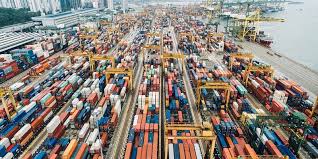
The ports of Shenzhen and Guangzhou rank among the busiest in the world. They handle massive volumes of container traffic and provide efficient access to global shipping routes.
Efficient ports reduce logistics costs and support just in time manufacturing. They also allow firms to respond quickly to changes in global demand, an essential capability in fast moving consumer electronics markets.
Deep Talent Pool and Rapid Prototyping Culture
Over time, the Pearl River Delta has developed a deep talent pool in electronics engineering, manufacturing process design, and product development. Technical universities, vocational schools, and on the job training programs feed a steady stream of skilled workers into the ecosystem.
Equally important is the region’s culture of rapid prototyping. Engineers are accustomed to building, testing, and revising physical products quickly. This mindset aligns with the needs of modern hardware development, where speed and flexibility often determine success.
Strategic Role in China’s Industrial System
The Pearl River Delta occupies a unique strategic position within China’s broader manufacturing landscape. It serves as the country’s electronics and rapid manufacturing capital, complementing other regions that focus on heavy industry, advanced materials, or cost optimized production.
The region excels at short product cycles, customization, and high mix low volume production. This makes it indispensable for innovation driven industries where products change frequently and market demand is volatile.
At the national level, the Pearl River Delta supports China’s ambition to move from manufacturing volume to manufacturing value. It is where new product categories are tested, refined, and scaled. Even as some labor intensive production migrates inland or overseas, the core functions of design, integration, and early stage manufacturing remain concentrated here.
Global Significance and Future Outlook
Globally, the Pearl River Delta is embedded in countless supply chains. Smartphones assembled in the region are used on every continent. Appliances, lighting products, and industrial components flow to both developed and emerging markets.
While rising costs and geopolitical pressures have prompted diversification efforts, the region’s integrated ecosystem remains difficult to replicate. Manufacturing elsewhere often requires recreating not just factories, but entire networks of suppliers, skills, and institutions.
Looking forward, the Pearl River Delta is likely to continue evolving. Automation, advanced manufacturing, and deeper integration with software and digital services are reshaping production. Environmental regulation and energy efficiency are becoming more important. Yet the core strengths that made the region dominant remain intact.
The Pearl River Delta is not simply a manufacturing base. It is an industrial platform. Its continued relevance will shape global electronics and manufacturing for decades to come.