2025-09-29
Energy is one of those things we tend to take for granted. We flip a switch, and the lights come on. We plug in our phones, and they charge. We turn up the thermostat, and the house gets warm. Behind these simple actions lies a vast, complex, and evolving distribution system that ensures electricity and gas reach every home, office, factory, and data center in North America.
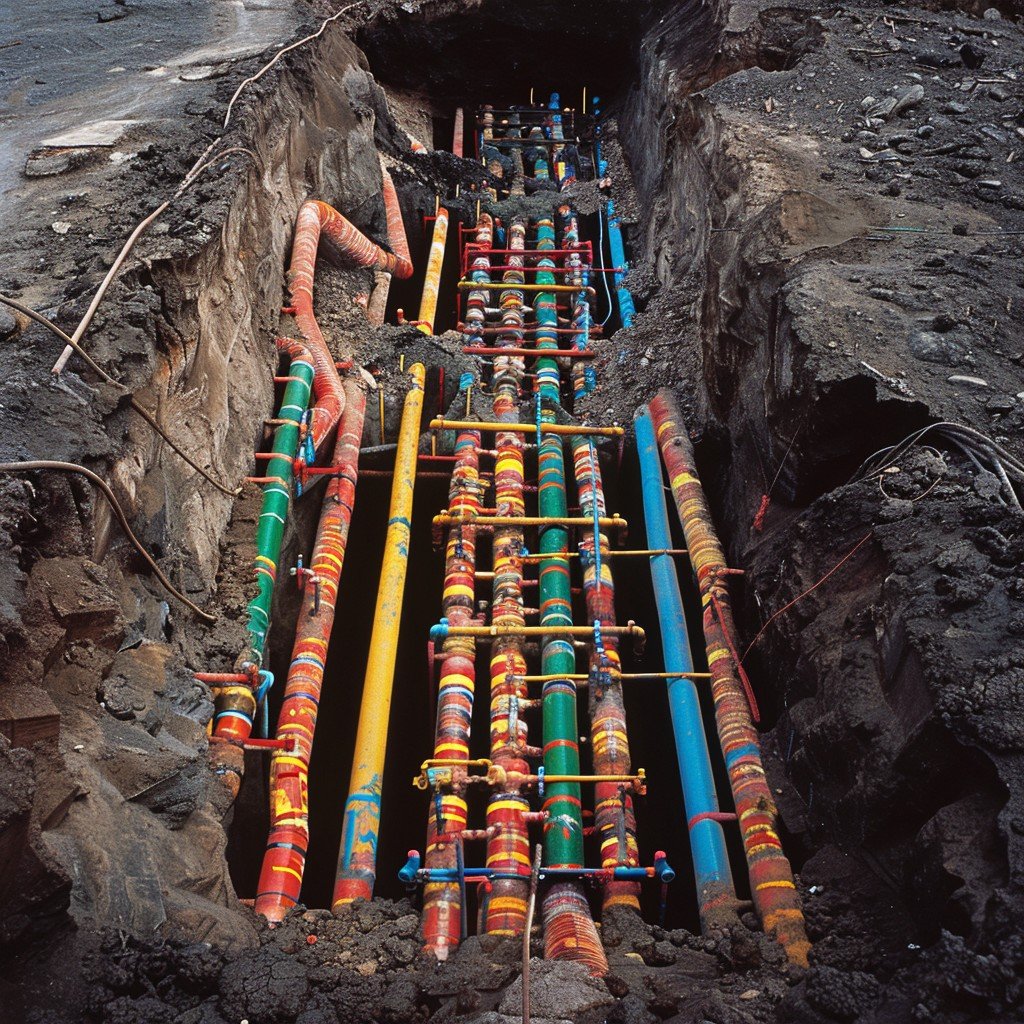
Distribution is the final stage of the energy supply chain, the critical link that connects generation and transmission to the end user. In this world, power is stepped down from high-voltage transmission lines into more manageable voltages, carried across neighborhoods, and delivered safely and reliably to millions of consumers. While it sounds straightforward, distribution is anything but simple. It involves a sprawling infrastructure of substations, transformers, feeders, underground cables, poles, meters, and increasingly, smart technologies that improve efficiency, resilience, and customer engagement.
In this article, we’ll take a deep dive into the world of energy distribution. We’ll explore the components of the supply chain, examine how smart grids and advanced metering are reshaping the industry, discuss the leading companies involved, and unpack the factors that drive profitability and risks. By the end, you’ll have a clear picture not only of how power gets to your doorstep but also of how investors can view this essential market segment.
The Basics of Distribution
At its core, distribution is about moving electricity and natural gas from the bulk transmission system to the final consumer. Think of the energy system as a river. Generation is the source high in the mountains, transmission is the powerful current that moves water downstream, and distribution is the branching streams that reach into every village and field. Without distribution, energy never completes its journey.
In electricity, the process begins at a substation, where high-voltage electricity traveling along transmission lines (often 138kV to 765kV) is stepped down to lower voltages, typically between 4kV and 35kV. From there, the energy flows into a network of distribution feeders that fan out into communities. Along the way, the voltage is further reduced by pole-mounted transformers until it reaches the familiar 120/240V that powers homes and small businesses. Larger industrial customers may receive higher voltages directly, but the principle is the same: make electricity usable and safe.
In natural gas, distribution begins at city gates, where pipelines owned by interstate or intrastate transmission companies deliver gas to local distribution companies (LDCs). The gas is then depressurized, odorized for safety, and sent through a web of mains and service lines that eventually connect to furnaces, stoves, and industrial burners.
This network is vast. In the U.S. alone, there are more than 6.5 million miles of distribution lines, compared to just 300,000 miles of transmission. This illustrates the sheer scale and capital intensity of the business. Distribution is not optional. It is the essential infrastructure of modern life.
The Components of the Distribution Supply Chain
Distribution may look like a simple web of wires and pipes, but each component plays a critical role. Let’s break it down step by step.
1. Substations
These are the hubs where transmission meets distribution. Substations contain transformers that reduce voltage, circuit breakers that protect the system, and control systems that regulate flows. Increasingly, substations are being automated with sensors and remote-control equipment, making them smarter and more resilient.
2. Feeders and Lines
Distribution feeders carry electricity out of substations and into communities. They may run overhead along poles or underground in urban areas. Feeder design affects reliability: radial feeders are cheaper but vulnerable to outages, while looped and networked designs provide redundancy.
3. Transformers
Before electricity enters your home, it must be stepped down to safe levels. This is the job of transformers. They can be pole-mounted in neighborhoods, pad-mounted in underground systems, or installed at large industrial sites.
4. Meters
Meters measure how much energy you consume. Traditional meters required manual readings, but the rise of advanced metering infrastructure (AMI) allows utilities to collect data remotely in real time. Smart meters also enable dynamic pricing, outage detection, and customer engagement tools.
5. Control Systems
Distribution management systems (DMS) monitor the network, detect faults, and reroute power. With more distributed energy resources (like rooftop solar and batteries) connecting to the grid, these control systems are becoming central to balancing supply and demand at the local level.
6. Workforce and Maintenance
Behind the physical assets are the lineworkers, engineers, and technicians who keep the system running. Distribution is labor-intensive, requiring constant inspection, vegetation management, and emergency response to storms or accidents.
7. Gas-Specific Infrastructure
For natural gas, the chain includes city gate stations, pressure regulators, odorization units, mains, and service lines. Safety is paramount, with monitoring systems to detect leaks and protect communities.
Each piece is capital-heavy, long-lived, and essential. For investors, this means distribution is typically a regulated utility business with predictable returns, but also heavy ongoing investment requirements.
Smart Grids and the Rise of Digital Distribution
The traditional distribution model was one-directional: power flowed from plants to consumers, and meters spun forward. That model is breaking down. With the rise of distributed generation (rooftop solar, community wind, small-scale batteries) and electric vehicles, power now flows in two directions. Distribution networks must become more intelligent and flexible to handle these new dynamics.
Smart grids are the answer. They integrate digital technologies into the grid to improve visibility, control, and efficiency. Some key features include:
- Advanced metering infrastructure (AMI): Smart meters provide near-real-time usage data, allow remote connections, and support time-of-use pricing.
- Sensors and automation: Utilities can detect outages instantly, isolate faults, and restore service faster.
- Demand response programs: Customers can be incentivized to reduce usage during peak times, lowering strain on the system.
- Integration of renewables: Smart grids allow distributed energy to feed into the system while maintaining stability.
- Energy storage: Batteries can smooth fluctuations and provide backup during outages.
For investors, smart grids create opportunities for technology providers (like Itron, Landis+Gyr, Schneider Electric, and Siemens) and for utilities that can earn regulated returns on these investments. They also improve resilience, a critical factor as climate change drives more severe weather.
The Major Players in North American Distribution
Distribution is highly fragmented and dominated by regulated utilities. These companies operate as monopolies within defined service territories, but they are overseen by public utility commissions (PUCs) that set rates and returns. Some of the biggest players include:
- Electric Utilities
- NextEra Energy (NEE)
- Duke Energy (DUK)
- Southern Company (SO)
- Dominion Energy (D)
- Consolidated Edison (ED)
- Hydro One (Canada)
- Fortis Inc. (Canada)
- Xcel Energy (XEL)
- Entergy (ETR)
- Gas Distribution Utilities
- Atmos Energy (ATO)
- NiSource (NI)
- Spire (SR)
- Enbridge Gas (Canada)
- Northwest Natural (NWN)
- Technology Providers
- Siemens, Schneider Electric, ABB, and General Electric for grid automation
- Itron and Landis+Gyr for metering infrastructure
- Tesla, Fluence, and AES for energy storage solutions
While many utilities are vertically integrated (owning generation, transmission, and distribution), others are purely distribution companies, focusing only on wires and pipes.
What Drives Earnings for Distribution Utilities
For an investor, the key question is what influences profitability. Distribution companies earn money in specific ways, usually dictated by regulation. Let’s break down the drivers.
1. Rate Base and Allowed Returns
Utilities earn a regulated return on their rate base, essentially the value of their invested assets. The larger the rate base, the more earnings they generate. Regulators determine the allowed return on equity (ROE), often in the 8 to 10 percent range.
2. Capital Expenditures
Investments in infrastructure (like smart meters, grid hardening, or undergrounding lines) increase the rate base. Utilities that can deploy capital efficiently often outperform.
3. Operating Efficiency
While utilities pass many costs to customers, regulators reward efficient operations and penalize poor performance. Reducing outages, improving service, and keeping costs low can support higher returns.
4. Weather and Demand
Distribution volumes are affected by heating and cooling demand, which is highly weather-dependent. Extreme weather can boost usage but also raise outage costs. Long-term, electrification trends (like EV adoption) will boost demand.
5. Regulation and Policy
Since utilities are monopolies, regulators wield enormous influence. Favorable regulation allows higher returns, while stricter rules cap profitability. Environmental and decarbonization policies also shape investment opportunities.
6. Financing Costs
Utilities are capital-intensive, often carrying high debt. Interest rates directly impact their cost of capital, which in turn affects allowed returns and shareholder value.
Risks in the Distribution Sector
Like any industry, distribution faces risks that investors must weigh. Key risks include:
- Regulatory risk: Unfavorable rate decisions can reduce returns.
- Weather risk: Hurricanes, ice storms, and wildfires can cause massive damage.
- Technological disruption: Distributed energy resources challenge the one-way distribution model.
- Rising costs: Inflation in materials and labor can pressure earnings.
- Decarbonization mandates: Accelerated clean energy targets may require costly upgrades.
- Public perception: Utilities face scrutiny when outages occur or when rates rise.
Opportunities in the Market
Despite risks, the distribution segment offers enormous opportunities:
- Electrification: As vehicles, heating, and industry electrify, demand for distribution services will grow.
- Resilience investments: Climate adaptation requires grid hardening, storm-proofing, and undergrounding lines.
- Smart technologies: Smart meters, automation, and energy storage create new revenue streams.
- Integration of renewables: Distribution will be the frontline for integrating solar, wind, and batteries.
- Stable dividends: Many utilities pay consistent dividends, making them attractive for income investors.
Investor Perspective: How to Approach Distribution Utilities
For investors, utilities are often seen as defensive stocks. They provide stable, regulated earnings, strong dividends, and lower volatility than most sectors. That said, not all utilities are created equal. Some are forward-thinking, investing heavily in smart grids and renewables, while others lag behind.
When evaluating utilities, investors should focus on:
- Regulatory environment: Some states and provinces offer more favorable rules.
- Capital allocation: Is the utility investing in growth areas or just maintaining?
- Dividend policy: Look for sustainable payout ratios and histories of dividend growth.
- Debt profile: High leverage is normal, but must be managed carefully.
- Innovation: Utilities embracing digital transformation and resilience investments may outperform.
For long-term investors, utilities can be a cornerstone of a portfolio, providing reliable income and protection during downturns.
Conclusion
The world of energy distribution is undergoing profound change. What was once a straightforward, one-way flow of electricity and gas is becoming an intelligent, flexible, and technology-driven network. Utilities are at the heart of this transformation, balancing reliability, sustainability, and affordability. For investors, the sector offers both stability and growth, with opportunities tied to electrification, digitalization, and decarbonization.
The next time you flip a switch, remember that behind that simple act lies one of the most complex and essential systems in modern life. And as that system evolves, it will continue to shape the way we live, work, and invest for decades to come.