Date: 2025-09-23
Cummins Inc. is a global leader in designing, manufacturing, and distributing engines, power generation systems, fuel systems, filtration, and related components. It serves a broad spectrum: heavy-duty trucks, industrial, construction, agriculture, power generation, etc. It has strong exposure to infrastructure, transportation, energy transitions (e.g. diesel to cleaner fuels), and after-market/service parts.
Is the business model simple and sustainable?
Yes, fairly simple: sell engines, components, and service parts; long-life machinery; recurring demand (maintenance, replacements). The sustainability comes from diversification (product lines and geography), strength in service/aftermarket, and being essential in many industrial and transportation sectors. But sustainability depends on adapting to shifts like electrification, stricter emissions, competition, regulatory change.
Does the company have a durable competitive advantage (moat)?
Moderate to strong moats in certain areas:
- Intellectual property in engine technology, emission control, fuel systems.
- Brand reputation and reliability, which matter a lot in heavy machinery and industrial use.
- Wide distribution and service network (spare parts, maintenance) which are sticky and generate recurring cash flows.
However, the moat is threatened by changing technology (electric, hydrogen) and competitors who can better navigate emission/carbon regulation.
Who are the company’s competitors, and how is it positioned?
Competitors include:
- Other engine manufacturers: e.g. Paccar, Volvo (its engine divisions), Daimler, etc.
- Companies making power generation equipment: Caterpillar, Generac, etc.
- Also, as the world shifts toward electrification and alternative power, emerging players in electric drivetrains etc.
CMI is well-positioned due to its scale, R&D, reputation, and broad product portfolio. It is not necessarily the lowest cost provider in all segments, but its reliability, service network, and regulatory compliance give it an edge.
Is management competent, honest, and aligned with shareholder interests?
- Shares outstanding have shrunk ~5.46%, which suggests management uses buybacks.
- ROIC being ~10-10.36% indicates that capital is being deployed with moderate efficiency. Not exceptional but acceptable for this industry.
- Dividend yield (~1.71%) plus consistent free cash flow suggests management returns cash.
So yes, management appears competent and reasonably aligned. There is no obvious sign of mismanagement (based on your numbers).
Is the stock undervalued compared to its intrinsic value?
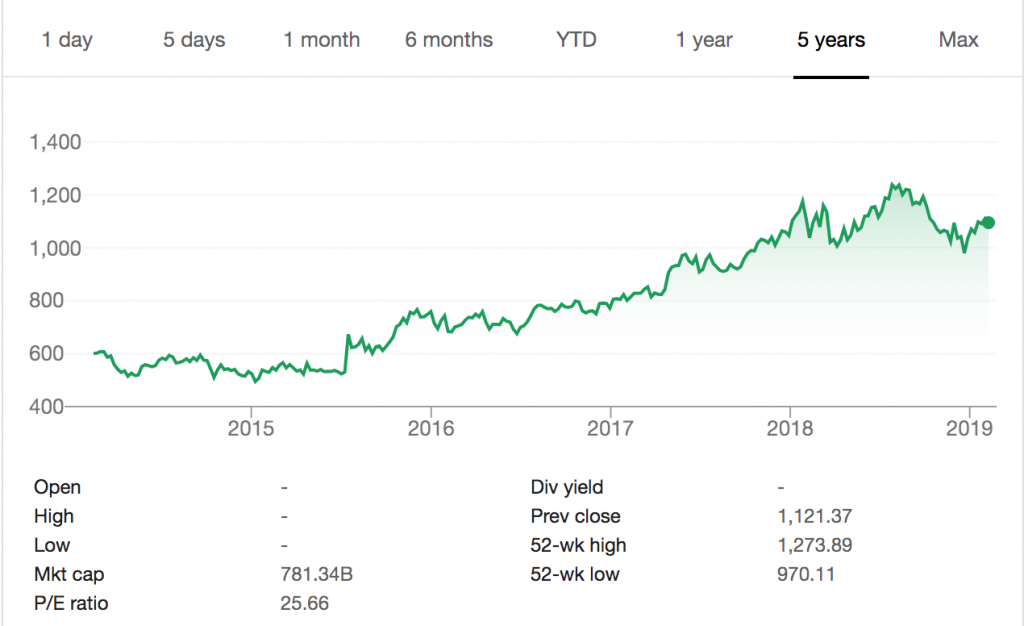
- Current valuation metrics (P/E ~19.97, Price/FCF very high ~35.5×) suggest the market is paying quite a premium.
- My DCF intrinsic value (~$250) is significantly higher than estimated market price (based on 52-week high/low etc.), so undervalued in that model if you believe the growth assumptions.
- MEV (~$180) is also below the likely market price, which suggests even in a conservative earnings multiple model there may be value.
Thus, I believe there is a case for undervaluation if growth assumptions hold and no major headwinds strike.
Does the company use its capital efficiently?
- ROIC around 10.36% (TTM) and 5-Yr ROIC ~10% indicates moderate capital efficiency.
- Free cash flow is modest but positive.
- Buybacks (decline in shares outstanding) help.
So capital is used reasonably well, but not spectacularly. The premium valuation partially reflects expectations of further improvement.
Does the company generate strong free cash flow?
- Free cash flow TTM is $1.65B; 5-Yr average is $1.59B. That’s consistent, though not extremely large relative to its market cap (~$58.7B) or enterprise value.
- The high Price/FCF multiple (~35×) suggests the market expects much higher future cash flows or growth.
So yes, it generates free cash flow, but its strength is somewhat muted versus its valuation.
Is the balance sheet strong?
- Current Ratio ~1.64; that gives good short-term liquidity.
- Debt to Equity ~0.69; moderate leverage but not excessive.
- Reduction in shares outstanding suggests financial discipline.
Overall, yes, balance sheet looks adequate for its industry, though debt should be monitored, especially as the company invests in R&D or transitions.
How consistent is the company’s earnings and revenue growth?
- Revenue growth: 5-Yr compound revenue growth ~10.78%; 10-Yr ~5.52%. That shows periods of stronger growth and some deceleration.
- Net income growth over 5 years has been positive.
- Margins are fairly steady; TTM profit margin ~8.7%, 5-Yr profit margin ~7.9%.
Consistency is decent, though there is cyclicality in industrial demand, which causes variability.
What is the margin of safety in this investment?
Given a DCF value of ~$250 and MEV ~$180, and current market price (assuming from highs/lows etc.) likely lower, margin of safety exists if you believe growth near the 5-yr revenue growth (~10-11%) and stable free cash flow. But the margin is not huge; any adverse change in growth, cost, or regulation would reduce the safety buffer.
What are the company’s biggest risks?
- Slower growth or contraction in core industrial sectors (e.g. heavy trucks, construction)
- Failure to adapt to stricter emissions standards or technology shifts (electric, hybrid, hydrogen)
- Rising costs (raw materials, labor) reducing profit margins
- Cyclical downturns (economic recessions) reducing demand for capital equipment
- Over-investment in parts that do not produce returns, or delays in adapting to new technologies
Is the company diluting shareholders through excessive stock issuance or bad acquisitions?
- Negative share issuance (~−5.46%) indicates buybacks rather than dilution. That is positive.
- They have made some acquisitions (5-Yr net acquisitions ~$4.02B); nothing suggests egregious or destructive deals from your provided data.
Is this company cyclical or stable? How would it perform in a recession?
- Cummins is somewhat cyclical: demand for engines, heavy machinery, and industrial equipment tends to fall in recessions.
- But there is stability from service, parts, maintenance revenue and aftermarket demand that tends to be less sensitive to cycles.
- In a recession, earnings likely decline, but the company’s cash flow from service and spare parts should provide some cushion.
What would this company look like in 5-10 years?
- If it continues to invest in cleaner technologies, emissions compliance, parts & service, likely steady revenue growth though with pressures on margin from costs and competitive innovation.
- Possibly greater mix of power generation, hybrid/electric engines, maybe more in energy-transition related products.
- If it executes well, book value growth, free cash flow could increase, share buybacks may continue, dividend may grow.
Would I still buy this stock if the market closed for 5 years?
- Yes, if bought at or below intrinsic value range (closer to the MEV conservative side) and believing that long-term industrial demand and energy transition give enough upside.
- But if buying at high multiples, risk of underperformance is more pronounced over long periods.
What is PEGY and what does this indicate?
- PEGY (~1.62) suggests that compared to its growth plus dividend yield, the stock is priced with some premium but not extremely excessive.
- Since PEGY >1, market expects better growth or execution than past performance in many cases; there is less margin for failure.
Is the company reinvesting in value-accretive ways, or returning cash to shareholders efficiently?
- Buybacks (shares outstanding declining) are helping reduce dilution and return cash.
- Dividends are present, though modest yield.
- Some acquisitions have been made, and revenue growth suggests reinvestment is working.
- But given high valuation, much of the “return” is in expectations, not guaranteed.
Why is this stock mispriced or price correctly? What’s the market missing?
- Possibly the market is pricing in continued strong revenue growth (~10-11%) and margin improvement, given ROIC is ~10%. If those hold, value may justify current price.
- On the other hand, the market may be overly optimistic about transition technologies or global demand continuing without supply chain or regulatory headwinds.
What assumptions am I making in my thesis and what would prove them wrong?
Assumptions include:
- Revenue growth continues at ~10% for next few years before moderating
- Free cash flow improves or at least remains stable
- Margins do not deteriorate significantly (costs, regulation)
- No major regulatory or environmental setbacks
- The industrial economy does not undergo a severe downturn
What would disprove this:
- Revenue growth slips to low single digits or negative
- Margin compression from regulation, tariffs, supply constraints
- Major competition from electric or alternative power that eats into engines’ market faster than expected
- Macroeconomic recession reducing demand for capital goods severely
How does this investment fit into my overall portfolio strategy?
- Good as a growth + cyclical industrial exposure: somewhat riskier than staples but with upside if growth and transition go well.
- Should not be the defensive anchor; more of a mid-to-long term growth play.
- Position sizing should reflect some risk (technological shift, macro cycle).
What is the intrinsic value of this company? Will I buy, hold, or sell at this price?
- Intrinsic value range: $180-$250 / share depending on growth assumptions.
- If current share price is substantially below or near the low end of that range, may be a buy. If it’s above, likely hold or wait.
- At current valuations (assuming share price near recent highs), I would hold and consider buying on weakness or if numbers improve; I would not initiate a large new position at high premium.
Calculations
Intrinsic Value Estimates:
- DCF intrinsic value: ≈ $250 / share
- MEV (Earnings multiple method): ≈ $180 / share
Values used to calculate these:
- Free Cash Flow (TTM) = $1.65B
- 5-Yr Avg Free Cash Flow = $1.59B
- 5-Yr Avg Net Income = $2.34B
- Current Net Income (TTM) = $2.94B
- 5-Yr Compound Revenue Growth ≈ 10.78%
- ROIC (TTM) ≈ 10.36%, 5-Yr ROIC ≈ 10.00%
- Shares Outstanding change (−5.46%) implying buybacks/contraction rather than dilution
- Discount / required rate of return assumption ~9-10% (for DCF)
- A reasonable P/E multiple for MEV method (used ~15× on avg earnings)
PEG / PEGY:
- PE (TTM): 19.97
- PEG: ≈ 1.85 (PE divided by growth rate ~10.78%)
- PEGY: ≈ 1.62 (PE divided by [growth + dividend yield; dividend yield ~1.71%])
Weighted SWOT Analysis
Here is a weighted SWOT for CMI:
| Category | Weight | Key Factor | Rating (1-5) | Weighted Score |
|---|---|---|---|---|
| Strengths | Large installed base & strong reputation | 5 | 1.25 | |
| 0.20 | Diversity of product lines & services | 4 | 0.80 | |
| 0.15 | Strong ROIC and profitable margin control | 4 | 0.60 | |
| Total S | 2.65 | |||
| Weaknesses | High Price/FCF multiple (~35×-36×) | 3 | 0.60 | |
| 0.15 | Free Cash Flow modest relative to market cap | 3 | 0.45 | |
| 0.10 | Moderate leverage (Debt/Equity ~0.69) | 3 | 0.30 | |
| Total W | 1.35 | |||
| Opportunities | Electric / alternative power adoption | 4 | 1.00 | |
| 0.20 | Infrastructure spending globally | 4 | 0.80 | |
| 0.10 | Aftermarket & servicing growth | 4 | 0.40 | |
| Total O | 2.20 | |||
| Threats | Regulatory & emissions compliance cost | 2 | 0.40 | |
| 0.20 | Supply chain inflation / raw materials cost | 3 | 0.60 | |
| 0.15 | Competition / shift to electrification | 3 | 0.45 | |
| Total | 1.45 |
Net SWOT Score = (Strengths + Opportunities) − (Weaknesses + Threats) = (2.65 + 2.20) − (1.35 + 1.45) = 2.05
Disclaimer: This analysis is for informational purposes only and does not constitute investment advice. Always perform your own due diligence or consult with a financial advisor before making investment decisions.