The Eight Pillars of Industrial Ecosystems

The Eight Pillars of Sustainable Industrial Ecosystems represent the underlying architecture that allows manufacturing bases to emerge, scale, and endure across technological and economic shifts. Rather than relying on a single factor like low wages, industrial dominance is built on a specific set of mutually reinforcing conditions, ranging from the “nervous system” of supply chains to the physical foundation of infrastructure. When these pillars are aligned, they create a self-sustaining environment characterized by industrial fluidity, where goods, energy, and information move with minimal friction, allowing a region to adapt and thrive as a process rather than a static destination.

Pillar NameCore FunctionKey ComponentsCritical Success FactorsRisk FactorsStrategic Role (Inferred)
Supply ChainsActs as the central nervous system to transmit information, coordinate movement, and enable response.Local/regional inputs, intermediate goods, tooling, maintenance, testing, packaging, and logistics services.Proximity and density of suppliers, depth (redundancy), and fluidity based on trust and information flow.High coordination costs, compressed timelines, and fragility during disruptions if alternatives do not exist.Ensures the manufacturing base is responsive and resilient by facilitating efficient resource flow and reducing vulnerability to single-point failures.
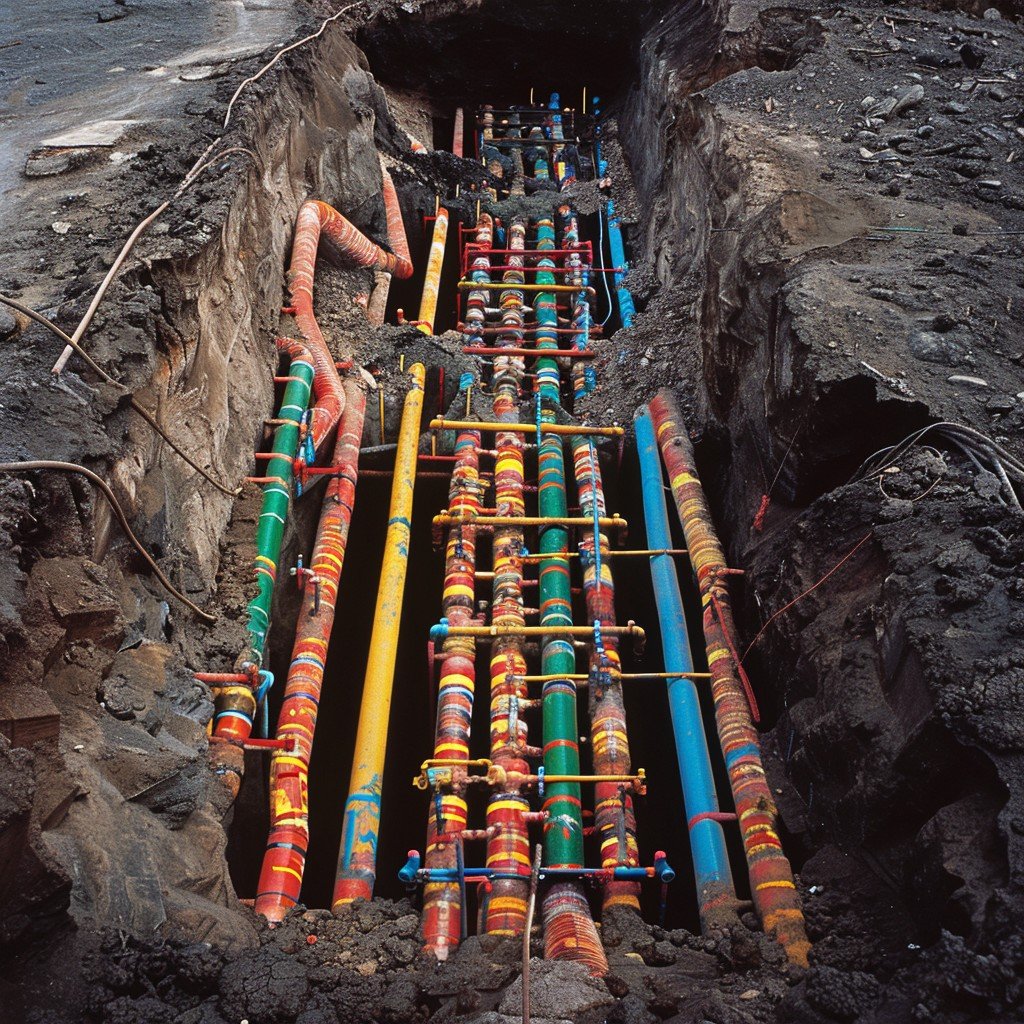
InfrastructureProvides the physical foundation for movement and industrial scale.Ports, airports, highways, railways, power distribution, water systems, waste treatment, and broadband.External and internal connectivity, industrial-grade utility services, and state absorption of upfront capital costs.Congestion, bottlenecks, fragmented jurisdictions, and uncertainty in global trade integration.Creates a durable competitive advantage that allows a region to scale production and integrate reliably into global markets over decades.
EnergyConverts energy into industrial value; serves as a primary production constraint.Generation capacity, transmission lines, grid management, and diverse fuel/energy mixes.Reliability (no outages), scalability to match demand growth, and affordability.Voltage fluctuations, fuel shortages, and regulatory processes that move slower than industrial demand.Maintains the competitiveness of high-precision and heavy industries by ensuring uninterrupted, scalable power necessary for modern automation.
LaborProvides the human capacity for production and technical execution.Engineers, technicians, operators, supervisors, and vocational training/education systems.Scale (workforce size), skill diversity, mobility, and alignment between education and industrial needs.High costs of importing talent, rigid labor systems that reduce responsiveness, and inability to mobilize quickly.Builds a self-sustaining talent pool that attracts investment and allows the industrial base to adapt to complex technical requirements.
CapitalFinances the intensive upfront costs and long payback periods of manufacturing.State banks, development finance, long-term private investors, and working capital for SMEs.Patience (tolerance for cyclical returns), abundance, and directed flow toward priority sectors.Short-termism, speculative investment, and liquidity failures among small-to-medium suppliers.Supports the long-term stability and growth of the ecosystem by ensuring firms can invest in equipment and survive economic cycles.
TechnologyInstitutionalizes industrial learning and cumulative knowledge improvement.Process innovation, automation, digital tools, and equipment upgrades.Tacit knowledge accumulation, rapid digitalization, and focus on process/yield improvement.Falling behind in digitalization and failure to capture incremental knowledge from production cycles.Drives continuous productivity gains and competitive moats that prevent the manufacturing base from being easily replicated by competitors.
InstitutionsGoverns the rules, contracts, and standards of the ecosystem.Legal contracts, standards, dispute resolution systems, and local administrative authorities.Institutional reliability, predictable standards, and fast local permitting/problem resolution.Arbitrary rule changes, paralyzed production due to disputes, and over-centralized decision-making.Reduces systemic risk and friction by providing a stable and predictable environment for long-term industrial planning and investment.
AdaptabilityEnables the ecosystem to survive shifts in technology, costs, and markets.Labor migration, automation of capital-intensive processes, and industry replacement cycles.Tolerance for churn (firm failure), worker retraining, and willingness to reinvent regional industries.Clinging to static advantages and decline due to an inability to evolve with global shifts.Acts as the ultimate safeguard against obsolescence, ensuring the manufacturing base remains relevant despite inevitable economic and technological changes.

Source of the this information: https://www.amazon.ca/Made-China-Mapping-Manufacturing-Landscape-ebook/dp/B0GDRZH2JL

Scroll to Top