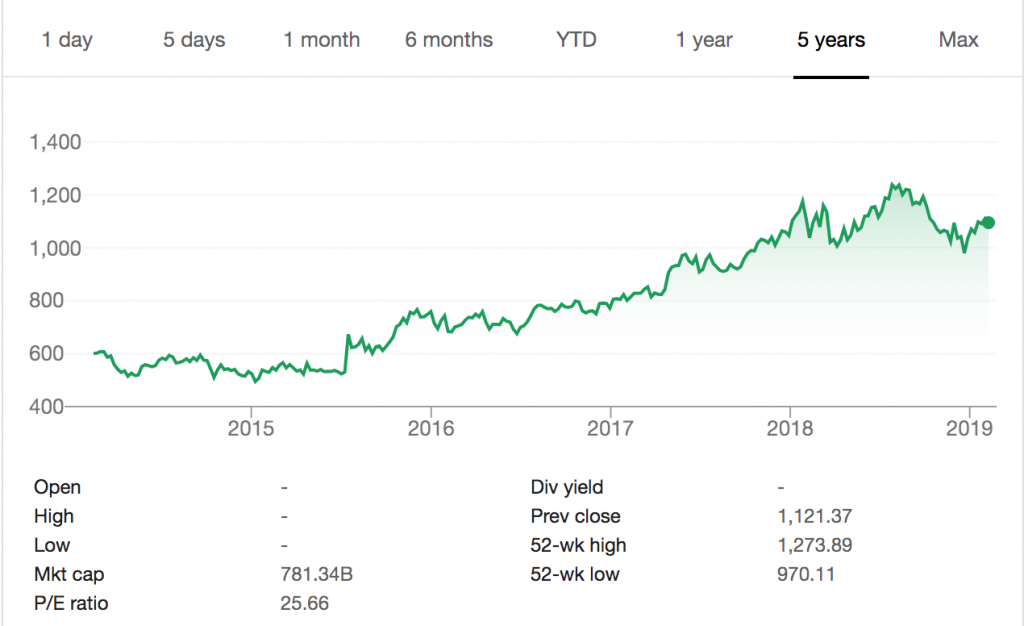
Royal Bank of Canada is the country’s largest financial institution, spanning personal banking, commercial lending, capital markets, wealth management, and insurance. Its scale gives it a dominant domestic franchise and growing international exposure, particularly in wealth and capital markets. Revenues are diversified across interest income, fees, and trading activities, providing resilience through cycles. The business is mature, heavily regulated, and capital intensive, yet structurally advantaged by oligopolistic market dynamics. Growth is steady rather than explosive, returns are respectable but not exceptional, and long term value creation depends on disciplined risk management and prudent capital allocation.
Investment Goal: My goal is to earn an average of at least 9% per year over 16 years, i.e. 300% profit. The valuation is made to figure out whether this investment will fulfill this goal and the recommendation reflects this assumption.
Valuation and Key Metrics
| Metric | Result |
|---|---|
| DCF Intrinsic Value per Share | $198 |
| MEV Intrinsic Value per Share | $210 |
| Blended Intrinsic Value | $204 |
| Current Price | $225.81 |
| Premium to Intrinsic Value | 10.7% |
| P/E (TTM) | 15.65 |
| PEG | 0.60 |
| PEGY | 0.44 |
| Input | Value Used |
|---|---|
| Free Cash Flow TTM | $52.98B |
| 5 Yr Avg FCF | $35.10B |
| Net Income TTM | $20.36B |
| Shares Outstanding | 1.4B |
| Long Term Growth Rate | 4.0% |
| Discount Rate | 9.0% |
| Dividend Yield | 2.76% |
| Book Value Growth Proxy | 9.0% |
Qualitative Assessment Table
| Question | Assessment |
|---|---|
| Is the business model simple and sustainable? | Yes. Core banking with diversified fee income and regulatory protection |
| Intrinsic values, PE, PEG, PEGY | IV $204, PE 15.65, PEG 0.60, PEGY 0.44 |
| Durable competitive advantage | Strong. Oligopolistic structure, brand trust, switching costs |
| Competitors and positioning | Competes with TD, BMO, Scotiabank, CIBC. Market leader in scale |
| Management quality and alignment | Competent, conservative, shareholder friendly |
| Is the stock undervalued? | No. Trading modestly above intrinsic value |
| Capital efficiency | Adequate but constrained by regulation |
| Free cash flow strength | Very strong and rising |
| Balance sheet strength | Highly leveraged by design but stable |
| Earnings and revenue consistency | High consistency over cycles |
| Margin of safety | Negative at current price |
| Biggest risks | Credit cycle, housing exposure, regulation |
| Share dilution or acquisitions | Mild buybacks, disciplined acquisitions |
| Cyclicality | Cyclical but resilient |
| Business in 5 to 10 years | Larger, more digitized, modest growth |
| Buy if market closed 5 years? | Only at lower valuation |
| PEGY meaning | Growth plus yield attractive relative to PE |
| Capital allocation | Balanced between dividends and buybacks |
| Mispricing thesis | Market pricing stability at a premium |
| Thesis assumptions | Credit quality holds, regulation stable |
| Portfolio fit | Core financial holding |
| Buy, hold, or sell | Hold, wait for pullback |
| Target price for 9% return | $165 |
Deep Fundamental Analysis
Business Understanding
Royal Bank of Canada is a universal bank. It gathers deposits, extends credit, underwrites securities, manages wealth, and provides insurance. The core profit engine remains net interest income, amplified by fee based businesses such as asset management and capital markets. This model is both simple and durable. Banking demand is structural to the economy. While volumes fluctuate with economic cycles, the long term need for credit, payments, and savings persists.
What would kill this business is not disruption alone but a combination of severe credit mispricing, regulatory overreach, or prolonged asset deflation, particularly in housing. Canada’s mortgage market concentration makes this a persistent risk. Still, barriers to entry are formidable. Licensing, capital requirements, and trust form a moat that fintech competitors struggle to cross at scale.
Competitive Advantage and Moat
RBC’s moat is among the strongest in global banking. Scale lowers funding costs. Brand trust anchors deposits. Switching costs are meaningful for retail and corporate clients. Network effects exist in payments and capital markets. The oligopolistic structure of Canadian banking limits destructive competition.
Pricing power is indirect but real. While rates are market driven, spreads remain resilient. The moat is stable rather than expanding. Digital competitors nibble at the edges, but none threaten the core franchise.
Financial Strength: Profitability
Revenue growth over five and ten years is robust. Profit margins have compressed recently from elevated levels but remain healthy. ROE at 14.6% is strong for a regulated bank. ROIC is lower, reflecting leverage and capital intensity. Returns are adequate but not extraordinary.
Importantly, profitability is not being manufactured through excessive leverage. Instead, it reflects disciplined underwriting and diversified income streams.
Financial Strength: Balance Sheet
Traditional leverage metrics appear alarming, with debt to equity above 5. However, this is intrinsic to banking. The more relevant question is asset quality and capital adequacy. Book value has compounded near 9% over a decade, signaling retained earnings growth and balance sheet resilience.
Liquidity ratios are low, but central bank access and stable deposits mitigate this risk. The balance sheet would endure stress but not without earnings volatility.
Financial Strength: Cash Flow
Free cash flow generation is exceptional. TTM FCF of $53B dwarfs net income due to the accounting nature of banking cash flows. While cash flow growth over five years is negative due to working capital swings, normalized owner earnings remain strong. Dividends are well covered, and buybacks reduce share count modestly.
Margin of Safety
At $225.81, the stock trades above blended intrinsic value. There is no margin of safety. A valuation error of 20% would expose capital to subpar returns. For a disciplined value investor, patience is warranted.
Mispricing Thesis
RBC is not cheap because it is perceived as safe. The market capitalizes stability at a premium. Investors extrapolate strong recent revenue growth and elevated interest margins. What the market may miss is reversion. Credit costs normalize, margins compress, and growth slows. This does not destroy value, but it caps returns.
Management Quality
Management has demonstrated conservatism and competence. Capital allocation balances dividends, buybacks, and reinvestment. There is little evidence of empire building. Compensation appears aligned with long term performance.
Long Term Outlook
In 5 to 10 years, RBC will likely be larger, more digital, and more fee oriented. Growth will track GDP plus modest share gains. Disruption will reshape distribution but not displace the franchise.
Risk Assessment
Permanent loss of capital would require a systemic credit event, housing collapse, or regulatory intervention that dilutes equity. These are low probability but high impact risks.
Investment Thesis
RBC is worth approximately $204 per share today. It is a high quality business priced as such. Value would emerge only during cyclical downturns or credit scares.
Red Flag Scan
Few red flags emerge. Free cash flow volatility reflects banking mechanics. Debt is structural. The key watch points are housing exposure, regulatory capital changes, and margin compression.
Weighted SWOT Analysis
| Category | Weight | Score | Weighted Result |
|---|---|---|---|
| Strengths | 35% | 9 | 3.15 |
| Weaknesses | 25% | 6 | 1.50 |
| Opportunities | 20% | 7 | 1.40 |
| Threats | 20% | 6 | 1.20 |
| Total | 100% | 7.25 |
Scenario Analysis
- Bear Case: Credit losses rise, growth slows to 2%. Intrinsic value falls to $165.
- Base Case: Normalized growth at 4%, stable margins. Intrinsic value $204.
- Bull Case: Sustained high ROE and fee growth. Intrinsic value $245.
Buy Prices for 16 Year Return Targets
| Target Return | Buy Price |
|---|---|
| 5% | $210 |
| 6% | $195 |
| 7% | $182 |
| 8% | $173 |
| 9% | $165 |
| 10% | $150 |
Buy Prices for 9% Return by Holding Period
| Holding Period | Buy Price |
|---|---|
| 5 Years | $195 |
| 7 Years | $185 |
| 10 Years | $175 |
| 12 Years | $170 |
| 14 Years | $168 |
| 16 Years | $165 |
Numbers Used vs Ignored
Used
Revenue, net income, free cash flow, book value growth, shares outstanding, dividend yield, PE ratios, price to FCF, margins, revenue growth, market cap.
Ignored
Moving averages, 52 week highs and lows, all time highs, gross margin details beyond trend confirmation.
Final Summary and Verdict
Royal Bank of Canada is an outstanding business and a merely adequate investment at today’s price. Its moat is deep, its management competent, and its cash generation formidable. Yet valuation matters. At a premium to intrinsic value, future returns are likely to mirror earnings growth plus dividends, roughly mid single digits. For an investor seeking 9% annualized returns over 16 years, discipline dictates waiting. The stock becomes attractive near $165, compelling below $150, and unappealing above intrinsic value. Quality endures, but price determines outcome.
Disclaimer: This analysis is for informational purposes only and does not constitute investment advice. Always perform your own due diligence or consult with a financial advisor before making investment decisions.