Canadian Atlantic offshore oil stands at a turning point. For decades, the sector occupied a smaller but symbolically powerful place in the country’s energy landscape. Large scale, long lived offshore platforms such as Hibernia and Hebron demonstrated that Canada could operate some of the world’s most complex offshore systems in an extremely harsh environment. Today, new discoveries in deeper waters, emerging demands for reliable democratic energy supply, and shifts in global industrial policy have pushed Atlantic offshore resources back to the center of national debate.
This article examines the resource potential of the Atlantic offshore basin, the economic and geopolitical implications for Canada, the growing importance for Europe, the role of producers and supply chain firms, market wide effects, and the ways in which the sector aligns with modern Canadian industrial and financial policy. The result is a comprehensive view of a sector that may define Canada’s economic and geopolitical position through the next generation.
The Geology and Resource Potential of Atlantic Canada
The Atlantic region contains several basins, but the Jeanne d’Arc Basin and the more recently explored Flemish Pass Basin have attracted most attention. These are offshore regions located off the coast of Newfoundland and Labrador. The geology is characterized by high quality light crude oil trapped in deepwater or ultra deepwater structures. Hibernia, Terra Nova, White Rose, and Hebron were some of the early breakthroughs that brought global attention to the region.
More recent exploration programs have identified new opportunities in deeper waters. The Flemish Pass Basin, for example, contains discoveries such as Bay du Nord which are located in significantly deeper waters than traditional Jeanne d’Arc Basin fields. The geology is promising because the crude is typically light, sweet, and well suited for modern refineries. The basin contains reservoirs with high pressure and structural complexity, requiring advanced subsea systems and floating production platforms.
The resource potential in these deepwater areas remains large. Despite decades of development, only a fraction of the geological structures have been fully explored. This makes the Atlantic basin one of the last frontier style oil regions within the borders of a stable, democratic nation with rigorous environmental standards.
Economic Foundations of Atlantic Offshore Development
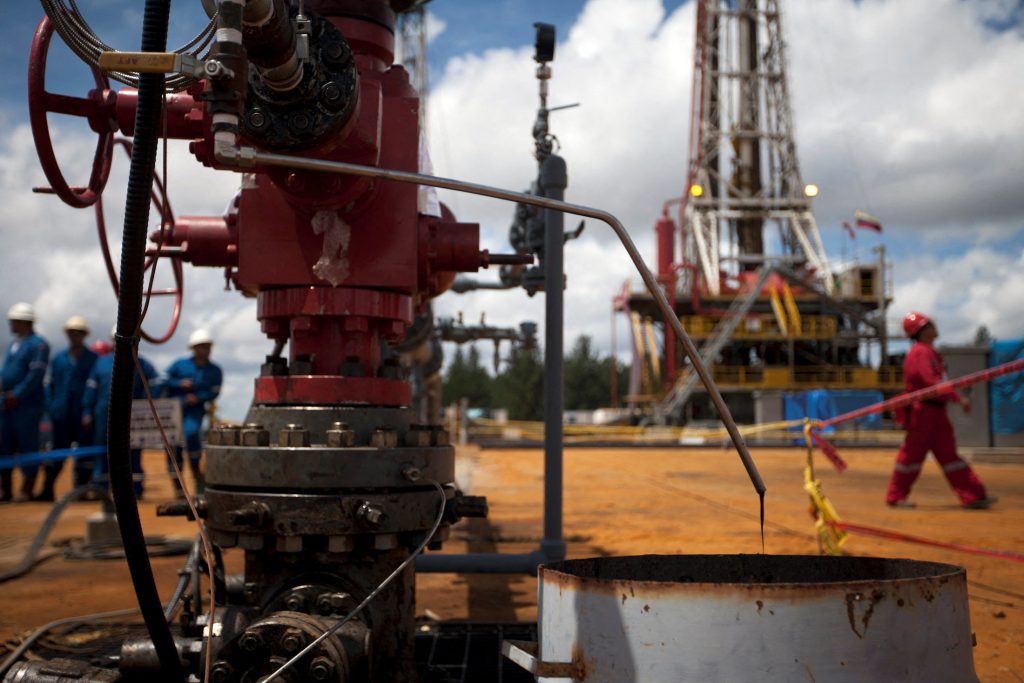
Offshore projects are among the most capital intensive industrial systems on earth. They require multi year exploration programs followed by design, engineering, fabrication, and installation of subsea networks and floating production vessels. Once operational, however, they deliver stable, long duration production profiles with relatively slow decline rates compared to shale.
This cost and time profile is attractive to companies that prefer long horizon investments with predictable cash flow. An offshore field can provide revenue for two or three decades, allowing firms to manage capital over a long period. For regions like Newfoundland and Labrador, these long duration projects create consistent employment, infrastructure development, and multi year demand for engineering, marine services, and fabrication industries.
The supply chain needed to support offshore development is extensive. It includes fabrication yards, subsea engineering firms, marine logistics companies, helicopter and aviation services, environmental monitoring technologies, and specialized training programs. Offshore development also drives secondary economic activity along the Atlantic coast, strengthening regional economies that often lack industries of comparable scale.
Why Atlantic Offshore Oil Matters to Canada
Canada is widely known for its vast oil sands located in Alberta. However, the Atlantic offshore region offers strategic benefits that are distinct from the continental resources.
First, the crude is light and sweet, a type that is more flexible for global refinery systems and often commands higher prices in international markets. Second, Atlantic oil can be exported directly to Europe, the United States Atlantic coast, and other international markets without reliance on transcontinental pipelines. Third, because offshore fields tend to have lower emissions per barrel than many global alternatives, they provide a way for Canada to supply oil with a reduced environmental footprint.
From a provincial perspective, offshore royalties and taxes have historically played a major role in the economy of Newfoundland and Labrador. The development of new deepwater fields can help stabilize a province dealing with demographic pressures, infrastructure needs, and economic diversification challenges.
Nationally, offshore oil reinforces Canada’s role as a reliable supplier for allies. The world is shifting toward a supply landscape that values stability and democratic governance. Atlantic offshore oil positions Canada as a partner of choice for countries seeking to reduce reliance on authoritarian regimes or regions with geopolitical risk.
Europe’s Rising Need for Stable Atlantic Energy
Europe’s energy system changed dramatically after the invasion of Ukraine. European states that were once heavily dependent on Russian pipeline gas and Russian crude began searching for secure, transparent, long term supply from politically aligned partners. The North Sea region faces declining production as mature fields age, which opens space for new Atlantic suppliers.
Canadian offshore crude can be shipped directly to European refineries with relatively predictable transit routes. These refineries already process light and medium grades similar to those found in the Jeanne d’Arc and Flemish Pass basins. European refiners value consistency and quality, and Canada can provide this without geopolitical risk.
Although Canadian offshore oil alone cannot solve Europe’s energy shortage, it plays a meaningful role in diversification. It reduces vulnerability to single supplier risk, supports trans Atlantic cooperation, and complements Europe’s transition strategy by providing stable supply while renewable energy and hydrogen sectors expand.
Impact on Global Oil Markets and Pricing Dynamics
Offshore projects add long term stability to global markets. Unlike shale wells, which decline rapidly and require constant reinvestment, offshore fields decline slowly and maintain output for many years. This stability contributes to global supply balance.
As North Sea production continues to decline, Atlantic Canada has the potential to fill part of the emerging supply gap within the Atlantic basin. This shift would influence tanker flows, maritime logistics, and benchmark pricing, since new supply from a politically stable region tends to reduce volatility and strengthen long term planning for refiners.
The growth of Canadian offshore output may also interact with shifts in OPEC production strategies. Long lived non OPEC offshore production often acts as a structural stabilizer in global markets, reducing the potential for extreme price swings.
What Offshore Development Means for Companies
Major companies such as Equinor, a globally respected offshore operator with Norwegian state backing, are central to the Atlantic region. These companies possess decades of experience in harsh offshore conditions, advanced subsea engineering, and floating production technologies.
For companies, the attractiveness of the Atlantic offshore lies in several factors. The reservoirs are well understood through seismic imaging and exploratory drilling, the geology supports long production lives, and regulatory oversight ensures stable operational standards. The region is also seen as an area where advanced digital technologies can be deployed, such as autonomous underwater vehicles, remote inspection systems, and advanced real time monitoring.
Supply chain firms stand to gain significantly. Offshore development requires specialized vessels, robotic systems, fabrication yards, subsea infrastructure suppliers, and continuous onsite services. This creates opportunities for Canadian and international companies in engineering, logistics, marine technology, and environmental monitoring.
Environmental and Technological Dimensions
Canadian offshore oil has a relatively low emissions profile compared to many other global sources. Modern offshore platforms incorporate efficient power systems, reduced flaring, advanced leak detection, and continuous emissions monitoring. Electrification of offshore platforms using subsea cables, although technically challenging in deepwater areas, is becoming a priority for new field designs.
Environmental stewardship is central to the industry’s social license. Regulatory frameworks in Canada require rigorous spill prevention, emergency response planning, and extensive environmental impact assessments. Deepwater and ultra deepwater operations also benefit from modern technologies such as high resolution seabed mapping, autonomous inspection drones, and satellite surveillance that monitor ocean conditions and potential surface anomalies.
Technological advancement aligns offshore development with both productivity and environmental protection. Companies now rely on predictive maintenance, artificial intelligence driven inspection planning, and digital twins to improve safety and reduce operating costs.
Alignment With Canadian Industrial Policy
Modern Canadian industrial policy includes priorities such as clean technology, advanced manufacturing, critical minerals, sustainable finance, and energy transition. Atlantic offshore oil fits into this ecosystem in several ways.
First, revenues and royalties from offshore projects can fund infrastructure, clean energy development, and innovation clusters. Second, the technological base that supports offshore oil such as robotics, subsea engineering, and marine data systems can be transferred to offshore wind, marine hydrogen pilots, and advanced oceanographic industries. Third, offshore development can coexist with national climate objectives if emissions are managed and if revenues are used to accelerate the transition.
Currently, Canadian government is focused on diversifying its trade away from United States. Atlantic offshore oil will be another step to fulfill this goal.
Regulatory and Policy Challenges
Despite its potential, the Atlantic offshore sector faces several challenges. Environmental assessments are often lengthy and complex, requiring input from federal agencies, provincial governments, Indigenous groups, and public stakeholders. These processes ensure credibility but can extend timelines and add uncertainty.
Investors also monitor shifts in national climate policy, carbon pricing systems, and offshore licensing frameworks. Company planning cycles span years, so inconsistent policy signals can deter investment.
For Canada to fully realize the value of its offshore resources, regulatory clarity and predictable timelines are essential. This does not mean relaxing environmental standards. Instead, it requires coordinated governance, transparent decision making, and predictable milestones that align with investor expectations.
Indigenous and Regional Partnership Opportunities
Offshore development intersects with Indigenous and regional communities through supply chains, employment programs, environmental monitoring, and economic partnerships. Many Indigenous communities in Atlantic Canada have growing capabilities in marine operations, environmental analysis, and skilled trades. Well designed partnerships can enhance economic inclusion, strengthen workforce diversity, and support long term community development.
Regional diversification is also crucial. Offshore revenues can be used to build sectors that remain viable after extraction slows, including ocean technology, data science, offshore wind, green hydrogen, and marine logistics.
Future Scenarios for the Atlantic Offshore Sector
A future with accelerated offshore development would create a stable Atlantic energy corridor. This corridor would supply Europe, the United States Atlantic coast, and other international markets while supporting provincial revenue and national economic resilience.
A future with stalled development due to regulatory or political uncertainty would reduce Canada’s influence in global energy markets and allow other producers to capture long term demand that could have gone to Canada.
A balanced development scenario would maintain responsible offshore expansion while using revenues to accelerate clean energy innovation, regional diversification, and technological modernization.
Among these, the balanced development model appears most aligned with Canadian industrial policy and long term economic interests. It acknowledges the reality of global oil demand over the coming decades while preparing for an eventual low carbon transition.
Conclusion
Canadian Atlantic offshore oil stands at a critical turning point. It is more than a regional resource. It is a strategic asset with implications for national prosperity, geopolitical alignment, industrial capacity, and global energy stability. For Europe, it represents a reliable source during a period of profound energy insecurity. For companies, it represents a high value, technologically advanced frontier with long term returns. For Canada, it represents a chance to balance economic opportunity with climate responsibility, all while strengthening industrial capabilities that support both extraction and transition technologies.
How Canada navigates this moment will determine whether the Atlantic offshore becomes a foundational contributor to national strength or a missed opportunity in a world that increasingly values stable, democratic sources of energy.
I fully expect Canadian government to take de-regulatory and investment attraction steps to capitalize on this critical resource.
Disclaimer: This analysis is for informational purposes only and does not constitute investment advice. Always perform your own due diligence or consult with a financial advisor before making investment decisions.