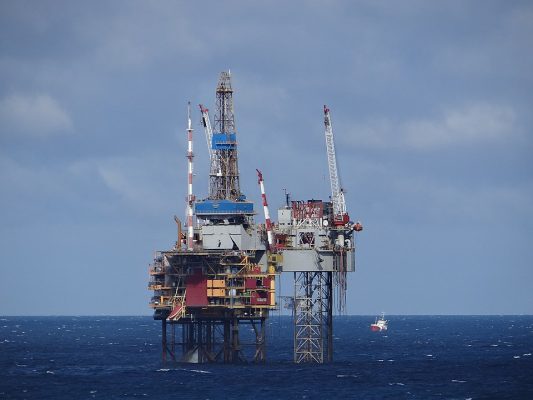
What It Would Really Cost to Take Venezuelan Oil Output to Alberta-Level Production: Why the Price Tag Goes Far Beyond Drilling

Venezuela’s oil endowment is undeniably vast. The country claims roughly 300 billion barrels of proven crude reserves, a figure larger than those of Saudi Arabia and Iran. Yet actual output tells a starkly different story: after decades of underinvestment, mismanagement, and international sanctions, Venezuela’s production has collapsed to well below one million barrels per day, a fraction of the levels that once made it a leading global producer. By contrast, Alberta’s oil complex routinely delivers multiple millions of barrels per day from its sands and conventional fields, underpinned by sustained capital expenditure, skilled labor, and decades of institutional stability. Bringing Venezuela’s production up to Alberta’s scale is not simply a matter of drilling more wells. It would require an unprecedented reconstruction of industrial capacity, human capital, governance frameworks, and security conditions, with total costs likely measured in the hundreds of billions of dollars and spread over a decade or more.

The Gap Between Reserves and Reality

Alberta’s oil sands industry operates on the basis of predictable regulatory regimes, established infrastructure, and deep access to international capital, allowing producers to invest tens of billions of dollars annually in maintaining and expanding capacity. In 2026, major producers such as Suncor reported robust production and refinery throughput, supported by market access and investment certainty.

Venezuela’s situation is almost the inverse. Despite hosting extra-heavy crude that is geologically similar in many ways to the bitumen of Alberta’s oil sands, its infrastructure is decayed, its workforce depleted, and its production apparatus largely non-functional due to governance failures and sanctions. Production once exceeded 3 million barrels per day in the late 1990s and early 2000s. Today’s output of under one million barrels per day reflects long-term deterioration, with pipelines, wells, refineries, and support systems that have suffered years of neglect.

What Must Be Rebuilt

The comparative exercise between Alberta and Venezuela reveals multiple layers of investment need:

Upstream Field Rehabilitation and Expansion

At the most basic level, Venezuela must restore wellhead equipment, drilling capacity, reservoir management systems, and ancillary facilities that have degraded over years. Under current conditions, many extraction assets operate at only a fraction of designed efficiency due to corrosion, lack of spare parts, and inadequate power. Restoring output requires not just refurbishing existing wells but installing new artificial lift systems, thermal recovery technology, and advanced reservoir controls to handle extra-heavy crude.

Independent analyses suggest that simply maintaining current output could require $50 billion to $60 billion over the next decade. To push beyond stagnation and toward multi-million-barrel output, the sort of throughput seen in Alberta, the cumulative upstream capex could easily approach $100 billion or more. Some industry estimates targeting historical pre-collapse levels by 2040 put the total investment envelope at around $180 billion to $200 billion.

Midstream and Export Infrastructure

Even if extraction facilities were restored, the network needed to transport and export crude is severely compromised. Venezuela’s pipeline grid, which once boasted significant theoretical capacity, now suffers from extensive corrosion, leaks, and mechanical failures. Export terminals and marine loading facilities require rehabilitation, modern control systems, and safety upgrades. Absent this midstream backbone, additional barrels extracted inland cannot reach global markets efficiently.

Upgrading and expanding midstream capacity could add tens of billions of dollars to total investment, particularly if pipelines must be made compatible with international norms on safety and environmental performance.

Refining Capacity

Venezuela’s refineries historically had nameplate capacities exceeding one million barrels per day, yet most now operate far below those levels due to equipment breakdowns and neglect. Bringing refinery throughput back to Alberta-comparative scales requires installing new crude units, cokers, and upgrade plants capable of converting extra-heavy feedstock into marketable products. This aspect alone could demand $20 billion to $40 billion in capex, depending on whether existing sites are retrofitted or new facilities are constructed.

Human Capital and Institutional Rebuild

Physical assets are only one piece of the puzzle. Venezuela’s oil sector has experienced a dramatic erosion of skilled personnel due to layoffs, emigration, and an institutional culture that prioritized political objectives over operational efficiency. Engineers, technicians, and field specialists have dispersed globally, leaving a skills gap that cannot be remedied without long-term recruitment, training, and retention programs. Efforts to rebuild human capital are inherently costly and slow relative to equipment deployment.

At the governance level, Venezuela must rebuild confidence among international investors. Years of state control, opaque decision-making, and legal uncertainty have suppressed capital inflows. Recent reforms that open the oil sector to foreign participation and independent arbitration represent progress, but skepticism remains about institutional durability. Strengthening regulatory frameworks, establishing transparent fiscal regimes, and ensuring contractual certainty are prerequisites for unlocking meaningful investment.

Security, Political Risk, and Governance Costs

Security conditions in Venezuela remain unstable. Crime, civil unrest, and weak rule of law impose additional direct and indirect costs on oil operations. Investors often require security overlays, insurance premiums, and risk-mitigating structures that add an extra 10 percent to 25 percent on top of base capex estimates. The political risk premium alone can materially elevate the cost of capital needed to finance large infrastructure projects.

A Full Cost Estimate

Aggregating these components suggests that a credible path to Alberta-level production — which could mean achieving sustained 2.5 million to 3 million barrels per day by 2035–2040 — might involve:

  • Upstream rehabilitation and expansion: $100 billion to $130 billion
  • Midstream and export network upgrades: $30 billion to $50 billion
  • Refining and processing capacity: $20 billion to $40 billion
  • Human capital rebuild and institutional reform programs: $20 billion to $30 billion
  • Security and governance risk premiums: additional contingent costs of $20 billion to $40 billion

Taken together, this framework suggests a total investment envelope of roughly $200 billion to $300 billion over a decade or more — with a heavy front-loaded commitment required in the early years to address the deepest deficits in infrastructure and governance.

Beyond Money: The Timeline and Risks

Even with sufficient capital committed, realizing these outcomes is not instantaneous. Oilfield redevelopment, pipeline rehabilitation, refinery modernization, and institutional reforms unfold over multi-year to multi-decade timelines, with significant regulatory and market risk at each stage. In many cases, incremental gains would likely precede comprehensive expansion; for example, with modest investment and operational improvements Venezuela might restore a few hundred thousand barrels per day within 2–3 years before larger increases become feasible.

Moreover, the economics of extra-heavy crude must be considered in the context of global oil markets. Production costs in Venezuela are relatively high due to the need for diluent blending and complex recovery techniques. At current oil prices, breakeven thresholds might be challenging for investors without fiscal incentives or premium pricing.

Strategic Implications

For global energy markets, a successful Venezuelan turnaround would reshape supply dynamics, particularly for refiners tuned to heavy crude grades. But the costs are not trivial, and the uncertainties substantial. Alberta’s success illustrates how stable governance, consistent capital flows, and integrated infrastructure create resilient production ecosystems. Venezuela’s path requires replicating those fundamentals at a scale that goes far beyond drilling rigs and well pads.

In conclusion, while Venezuela’s geological endowment is enormous, bridging the gap between reserves and realized production at Alberta-comparable levels demands far more than capital alone. It requires systemic reconstruction, of infrastructure, institutions, human capital, and political frameworks, with total costs likely in the low hundreds of billions of dollars and realization horizons stretching into the next decade or beyond.

Scroll to Top