When Mark Carney became Canada’s prime minister in March 2025, he entered office during a period of economic anxiety and geopolitical uncertainty. Canadians were confronting a housing crisis, high living costs, strained relations with several major trading partners, and persistent criticism from allies about defense spending. Carney’s government has attempted to address these challenges through a combination of domestic reforms, international trade agreements, defense commitments, and industrial policy initiatives.
The following is a comprehensive examination of the major initiatives undertaken during his premiership so far, organized by policy area. Each section examines the underlying problem, the policy response, the substance of the agreement or reform, the expected benefits, and whether the measures meet Canada’s strategic needs.
International Trade and Economic Partnerships
Canada and China Strategic Trade Reset
What was the problem?
Relations between Canada and China deteriorated sharply during the late 2010s and early 2020s. Political tensions and retaliatory trade actions resulted in extremely high tariffs on Canadian agricultural exports. Chinese tariffs on Canadian canola products rose to roughly 85 percent, severely limiting access to a market that had once been among Canada’s largest. At the same time, Canada imposed heavy tariffs on Chinese electric vehicles as part of broader trade disputes.
What Canada needed
Canada needed to restore access to Chinese markets for agricultural exports while managing domestic concerns about industrial competition and geopolitical risk.
What the deal was
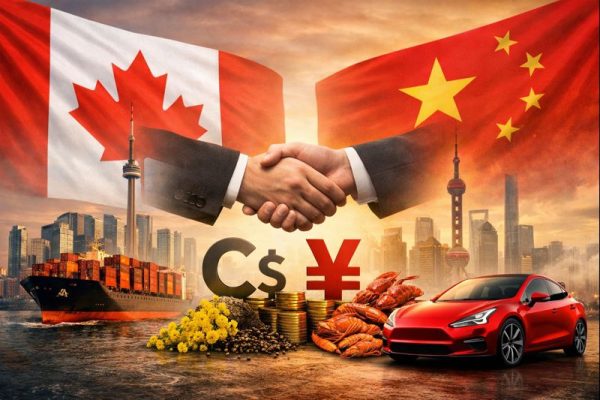
Canada and China negotiated a trade reset that included several major tariff reductions and market reopenings. China agreed to reduce tariffs on Canadian canola oil from about 85 percent to approximately 15 percent. Canada, in turn, reduced tariffs on Chinese electric vehicles from 100 percent to roughly 6.1 percent. China also reopened its markets to several Canadian agricultural exports including canola meal, peas, lobster, and crab.
What benefits we can expect and when
Canadian farmers and seafood exporters are likely to benefit quickly once the tariff reductions take effect. Agricultural exports could rise within one to three years as Chinese buyers return to Canadian suppliers.
Does this accomplish what Canada needs?
The agreement restores access to an important market for Canadian agriculture. However, the reduction in EV tariffs raises concerns about increased competition for Canada’s developing electric vehicle sector. The deal improves trade flows but does not remove the underlying geopolitical risks in Canada’s relationship with China.
Canada and India Economic Partnership
What was the problem?
Canada’s diplomatic relationship with India had cooled significantly in recent years, limiting economic cooperation between the two countries. Given India’s rapid economic growth, this represented a missed opportunity for trade and investment.
What Canada needed
Canada needed improved access to India’s expanding economy, particularly in energy, technology, education, and skilled labor mobility.
What the deal was
Canada and India signed a series of memorandums of understanding covering cooperation in energy, critical minerals, pharmaceuticals, and digital technology. The agreements also promote collaboration between universities and facilitate talent mobility programs for students and skilled workers.
What benefits we can expect and when
Because these arrangements are partnership agreements rather than binding trade treaties, their effects will likely develop gradually over three to five years. They could stimulate bilateral investment and research collaboration.
Does this accomplish what Canada needs?
The agreements improve diplomatic relations and open economic channels. However, most of the commitments remain preliminary and will require further negotiations to produce concrete trade results.
Canada and Australia Critical Minerals Alliance
What was the problem?
Western economies depend heavily on China for critical minerals such as lithium, uranium, and rare earth elements. These minerals are essential for batteries, electronics, and advanced defense technologies.
What Canada needed
Canada needed to strengthen secure supply chains for critical minerals and collaborate with allies on mining and processing capacity.
What the deal was
Canada and Australia established a partnership to coordinate exploration, processing, and supply chains for critical minerals. The agreement also includes cooperation on artificial intelligence, defense technologies, and maritime security. Australia’s participation connects to a broader G7 effort to reduce dependence on Chinese mineral supplies.
What benefits we can expect and when
New mining and processing projects typically take several years to develop. Investments in mineral production could generate economic benefits within five to ten years.
Does this accomplish what Canada needs?
Strategically the agreement supports supply chain diversification. Its success will depend on whether new mines and processing facilities are actually built.
Canada and the European Union Trade Modernization
What was the problem?
The Comprehensive Economic and Trade Agreement between Canada and the European Union was negotiated before the rapid growth of digital trade. The agreement lacked updated rules governing data flows, digital services, and technology collaboration.
What Canada needed
Canada needed stronger frameworks for digital commerce and improved access to European markets for technology companies.
What the deal was
Canada and the European Union agreed to modernize the existing trade agreement and begin negotiations toward a new digital trade framework. The modernization effort also aims to improve dispute resolution mechanisms and economic cooperation.
What benefits we can expect and when
If negotiations succeed, Canadian technology firms could gain improved access to European markets within three to six years.
Does this accomplish what Canada needs?
The initiative addresses an important gap in Canada’s trade architecture. However, the final results depend on lengthy negotiations and ratification processes.
Canada and Indonesia Free Trade Agreement
What was the problem?
Canada had limited bilateral trade agreements with Southeast Asian economies despite the region’s rapid growth.
What Canada needed
Canada sought greater access to emerging markets in Southeast Asia.
What the deal was
Canada signed a free trade agreement with Indonesia, marking Canada’s first bilateral trade agreement with an ASEAN member state.
What benefits we can expect and when
Trade flows between the two countries may expand over several years as tariff reductions take effect and businesses establish new supply relationships.
Does this accomplish what Canada needs?
The agreement diversifies Canada’s trade relationships but represents only one step toward a broader presence in Southeast Asian markets.
UAE Investment Agreement
What was the problem?
Canada needed substantial capital investment for infrastructure and economic development projects.
What Canada needed
Canada required large-scale foreign investment in infrastructure and industrial development.
What the deal was
The government reached an investment agreement worth approximately 70 billion Canadian dollars with the United Arab Emirates aimed at funding infrastructure and economic projects in Canada.
What benefits we can expect and when
If the investments proceed as planned, infrastructure development and job creation could occur over the next decade.
Does this accomplish what Canada needs?
The capital influx could support economic growth, though the partnership has generated controversy because of concerns regarding human rights in the UAE.
Domestic Economic and Social Policy
Removal of the Consumer Carbon Tax
What was the problem?
Canada’s carbon tax had become politically unpopular during a period of rising living costs. Many households associated the tax with higher gasoline and heating prices.
What Canada needed
Canada needed to address cost of living concerns while maintaining incentives to reduce industrial emissions.
What the deal was
The government eliminated the consumer carbon tax, reducing the price to zero beginning April 1, 2025. Industrial carbon pricing for large emitters remained in place.
What benefits we can expect and when
Fuel and heating costs declined immediately for households once the policy took effect.
Does this accomplish what Canada needs?
The policy provides short term financial relief. However, it raises questions about how Canada will meet long term climate targets.
Tax Cuts and Cost of Living Relief
What was the problem?
Inflation had eroded household purchasing power across Canada.
What Canada needed
Canadians needed direct financial relief through tax reductions and targeted benefits.
What the deal was
The government reduced the lowest federal income tax rate from 15 percent to 14 percent. It introduced a temporary GST exemption for first time home buyers and created a Groceries and Essentials Benefit to replace the previous GST credit.
What benefits we can expect and when
Households began experiencing financial relief within the first year after implementation.
Does this accomplish what Canada needs?
The measures provide short term support but do not address structural economic challenges such as housing supply constraints.
Build Canada Homes Housing Agency
What was the problem?
Canada faces one of the most severe housing shortages in the developed world. Home prices and rents have risen faster than wages.
What Canada needed
Canada needed to accelerate housing construction and expand financing for large development projects.
What the deal was
The government created Build Canada Homes, a federal agency tasked with financing housing construction and partnering with municipalities and developers to increase supply.
What benefits we can expect and when
Large housing developments typically require several years to complete. Significant increases in housing supply could take two to five years.
Does this accomplish what Canada needs?
The policy addresses a core problem but its success depends on how many homes are actually built.
Infrastructure and Industrial Strategy
Nation Building Infrastructure Program
What was the problem?
Canada has long faced infrastructure gaps in energy systems, transportation networks, and industrial development.
What Canada needed
Large scale infrastructure investments to improve productivity and economic competitiveness.
What the deal was
The government launched approximately 60 billion dollars in nation building projects including nuclear energy, LNG infrastructure, critical minerals development, and transportation corridors.
What benefits we can expect and when
Infrastructure investments typically deliver benefits over five to fifteen years through job creation and improved economic efficiency.
Does this accomplish what Canada needs?
The program addresses long term economic challenges but depends heavily on successful project execution.
Supply Chain and Trade Corridor Development
What was the problem?
Canada’s export economy relies heavily on transportation infrastructure that is often strained.
What Canada needed
Expanded ports, railways, and transportation corridors to move resources and manufactured goods efficiently.
What the deal was
Federal investments support port expansions, rail capacity increases, and transportation corridors linking resource regions to export markets.
What benefits we can expect and when
Improved logistics efficiency could enhance trade competitiveness within several years.
Does this accomplish what Canada needs?
Yes, though implementation timelines remain long.
Immigration and Workforce Policy
Immigration System Adjustments
What was the problem?
Rapid growth in temporary immigration placed pressure on housing and infrastructure.
What Canada needed
A more balanced immigration system that supports economic growth without overwhelming housing supply.
What the deal was
Temporary immigration levels were reduced from roughly 673,000 in 2025 to about 385,000 in 2026. Permanent immigration targets remain near 380,000 annually. New pathways allow some temporary workers to obtain permanent residency more easily.
What benefits we can expect and when
Housing demand pressures may ease gradually over several years.
Does this accomplish what Canada needs?
The adjustments moderate immigration growth but do not eliminate housing supply challenges.
Defense and Military Procurement
Meeting NATO’s Two Percent Defense Spending Target
What was the problem?
Canada has long spent below NATO’s defense spending benchmark of two percent of GDP.
What Canada needed
Greater military investment to modernize equipment and maintain credibility within NATO.
What the deal was
The government committed to reaching the two percent spending target while investing in Arctic surveillance, cyber defense, and military personnel.
What benefits we can expect and when
Defense capabilities will improve gradually as equipment and infrastructure are purchased over the next decade.
Does this accomplish what Canada needs?
It moves Canada toward NATO expectations but requires sustained funding to succeed.
EU SAFE Defense Procurement Participation
What was the problem?
Canadian defense companies often lacked access to large European procurement programs.
What Canada needed
Integration into allied defense supply chains.
What the deal was
Canada joined the EU SAFE procurement initiative, allowing Canadian companies to participate in European defense contracts.
What benefits we can expect and when
Canadian defense firms may secure contracts over the next several years.
Does this accomplish what Canada needs?
It benefits Canadian industry though direct military effects are limited.
Indo Pacific Defense Partnerships
What was the problem?
Canada had limited defense integration with Asian allies despite growing geopolitical tensions.
What Canada needed
Stronger partnerships in the Indo Pacific region.
What the deal was
Canada expanded defense cooperation with South Korea, Japan, and Australia including military exercises, research partnerships, and defense technology development.
What benefits we can expect and when
Greater interoperability and strategic cooperation will develop gradually over the next decade.
Does this accomplish what Canada needs?
The partnerships strengthen alliances but do not immediately increase Canada’s military capabilities.
Arctic Sovereignty and Northern Security
Arctic Defense and Infrastructure
What was the problem?
Climate change is opening Arctic shipping routes while geopolitical competition in the region intensifies.
What Canada needed
Improved surveillance, infrastructure, and military presence in the Arctic.
What the deal was
The government invested in Arctic radar systems, expanded northern airfields and ports, and advanced NORAD modernization efforts with the United States.
What benefits we can expect and when
Improved Arctic monitoring and infrastructure will develop over several years.
Does this accomplish what Canada needs?
The investments strengthen Canada’s northern security but represent only the beginning of long term Arctic development.
Technology and Industrial Innovation
Artificial Intelligence and Quantum Technology Investment
What was the problem?
Canada has strong research institutions but struggles to commercialize technology innovations.
What Canada needed
Investment in advanced technologies and commercialization pathways.
What the deal was
The government increased funding for artificial intelligence, quantum computing, and advanced technology commercialization.
What benefits we can expect and when
Economic benefits could emerge over five to ten years as new technologies reach commercial markets.
Does this accomplish what Canada needs?
It strengthens Canada’s innovation ecosystem but commercialization remains a persistent challenge.
Indigenous Economic Partnerships
Indigenous Participation in Resource Projects
What was the problem?
Major infrastructure and resource projects often faced delays because of unresolved relationships with Indigenous communities.
What Canada needed
Economic partnerships that provide Indigenous communities with ownership stakes in major projects.
What the deal was
Many infrastructure and resource developments now include equity partnerships with Indigenous communities in areas such as mining, energy, and transportation.
What benefits we can expect and when
These partnerships could improve project approval timelines and generate long term economic benefits for Indigenous communities.
Does this accomplish what Canada needs?
The approach reflects a shift toward shared economic development, though implementation varies across projects.
Conclusion
Carney’s first year in office has been marked by an ambitious attempt to reshape Canada’s economic and geopolitical position. Internationally the government has pursued trade diversification through agreements with partners such as China, India, Australia, Indonesia, and the European Union. Domestically it has focused on cost of living relief, housing construction, infrastructure development, and industrial policy tied to critical minerals and advanced technology.
At the same time Canada is attempting to rebuild its defense posture, strengthen Arctic sovereignty, and integrate its defense industry with allied procurement systems. Immigration adjustments, Indigenous partnerships, and public sector reforms add further layers to the government’s policy agenda.
Whether these initiatives ultimately succeed will depend less on the announcements themselves than on their execution. Infrastructure projects take years to build. Defense modernization requires sustained investment. Trade partnerships must translate into real commerce. For now, Carney’s government has laid out an expansive program that aims to address Canada’s structural economic and strategic challenges, even if the full results will take many years to emerge.